Access Control Systems Bowen Hills
When the first arrival is a driver at 4am and the main entry is a gate, keys and codes stop being good enough.
since
Monitoring
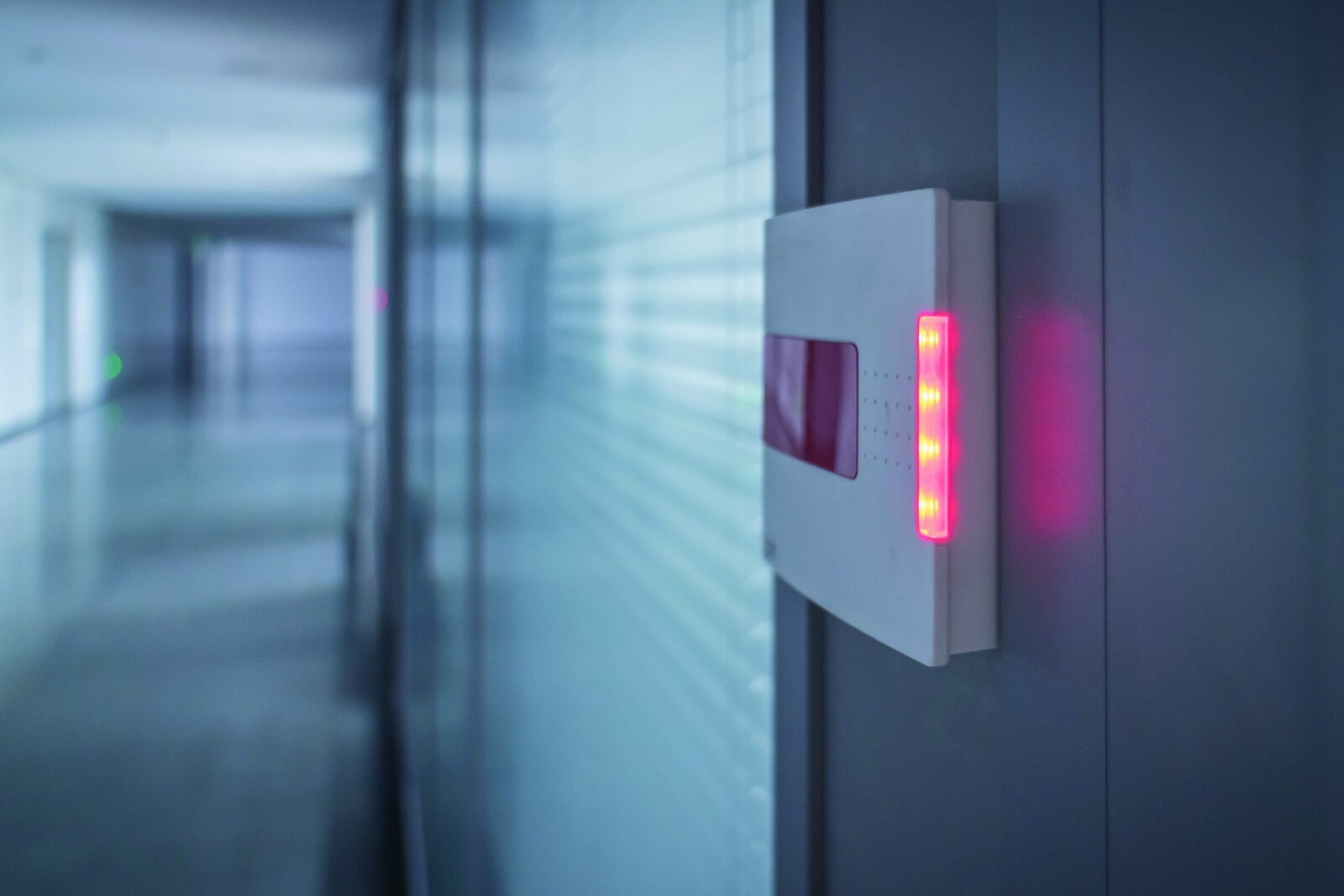
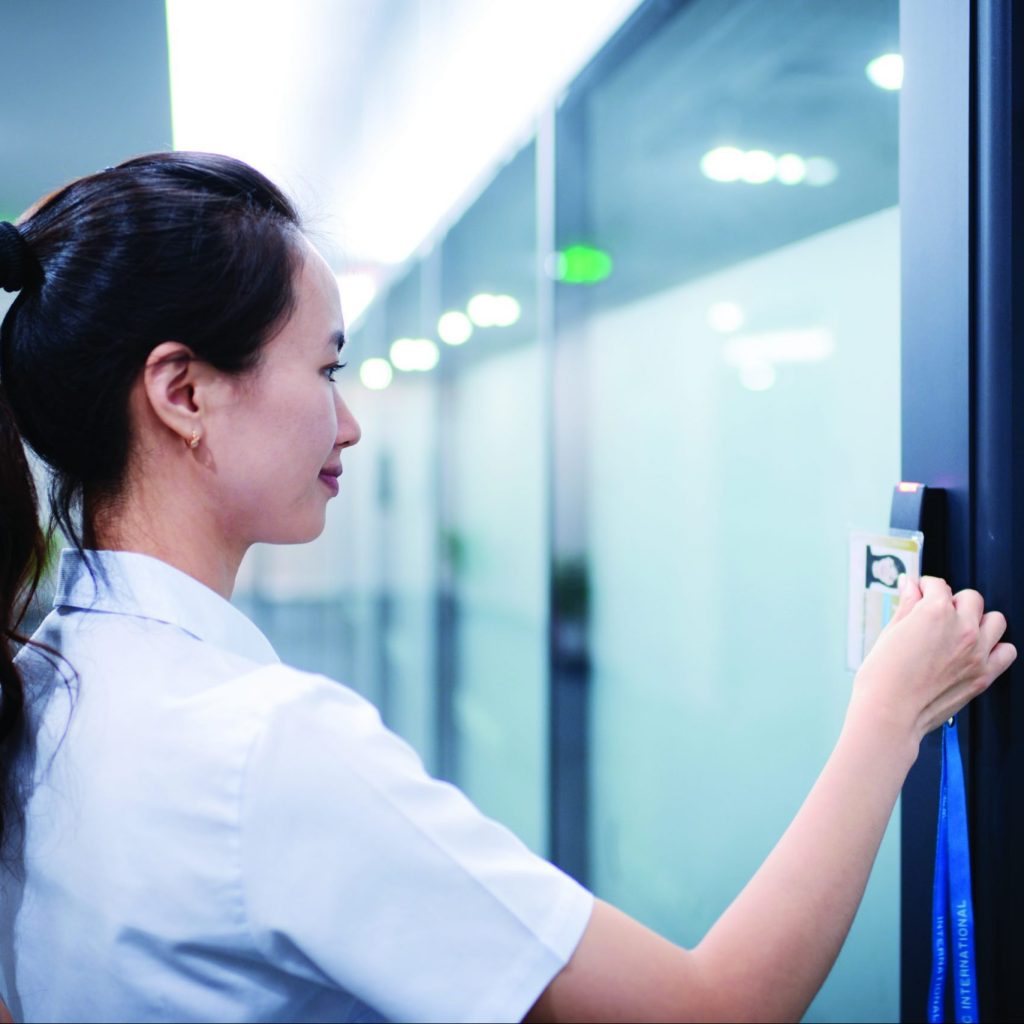
On an industrial site the entries that matter are rarely the front door. They are a vehicle gate, a roller shutter, a back-of-house door that props itself open all day, and a personnel gate used by people who arrive long before anyone sits down in the office. Those entries are used by drivers, contractors, shift staff and suppliers — a changing group, often unsupervised, often in the dark. A key or a shared code gives all of them the same permanent access and leaves no record of who used it.
Access control systems in Bowen Hills earn their keep by answering two questions: who can get in, and who did. Access Alarms designs, installs and supports access control on gates, shutters and doors, and our technicians work this area from Eagle Farm, a few minutes away. We will build credentials and schedules around how your site actually runs — including the 4am start and the shutdown week — rather than around how an office building runs.
Why Access Control Works Differently in Bowen Hills
Your main entry is a gate, and your widest one is a shutter
Industrial access control is mostly about openings built for vehicles. A sliding or swing gate and a roller shutter can both be controlled and logged, but they behave unlike a door: they are slow, they need safety devices, they are used from inside a vehicle, and leaving one open is far easier than leaving a door open. Controlling them properly means thinking about the time they take to close, what happens when something is in the way, and how a driver operates them without getting out.
The day starts before the office does
Drivers collecting a load, early shifts and contractors on a tight program all arrive when there is nobody to let them in. The usual workaround is a key, a shared code or a gate left unlocked from the night before. Each of those hands over unrestricted access permanently in exchange for one morning's convenience. Scheduled credentials solve it properly: the people who need a 4am start have it, only on the days they need it, and the system records each use.
Back-of-house doors are used constantly and controlled least
The door between the yard and the warehouse, the one onto the loading dock, the one beside the bins: these get the heaviest traffic on site and almost never get a credential. They are usually out of sight of the street and of reception, held by a single lock, and propped open with a pallet the moment anyone is carrying something. They are also the shortest route from the boundary to your stock, which makes them the most consequential doors to leave uncontrolled.
Getting out has to stay simple, in the dark and in a hurry
An industrial site has uneven ground, vehicles moving, limited lighting and a workforce that may be on site alone. Whatever controls going in must never complicate going out. Egress hardware, how locks behave when power is lost, and whether a person can leave through a gate on foot are safety matters first and security matters second — and on a site like this they need to work for somebody who does not know the building well.
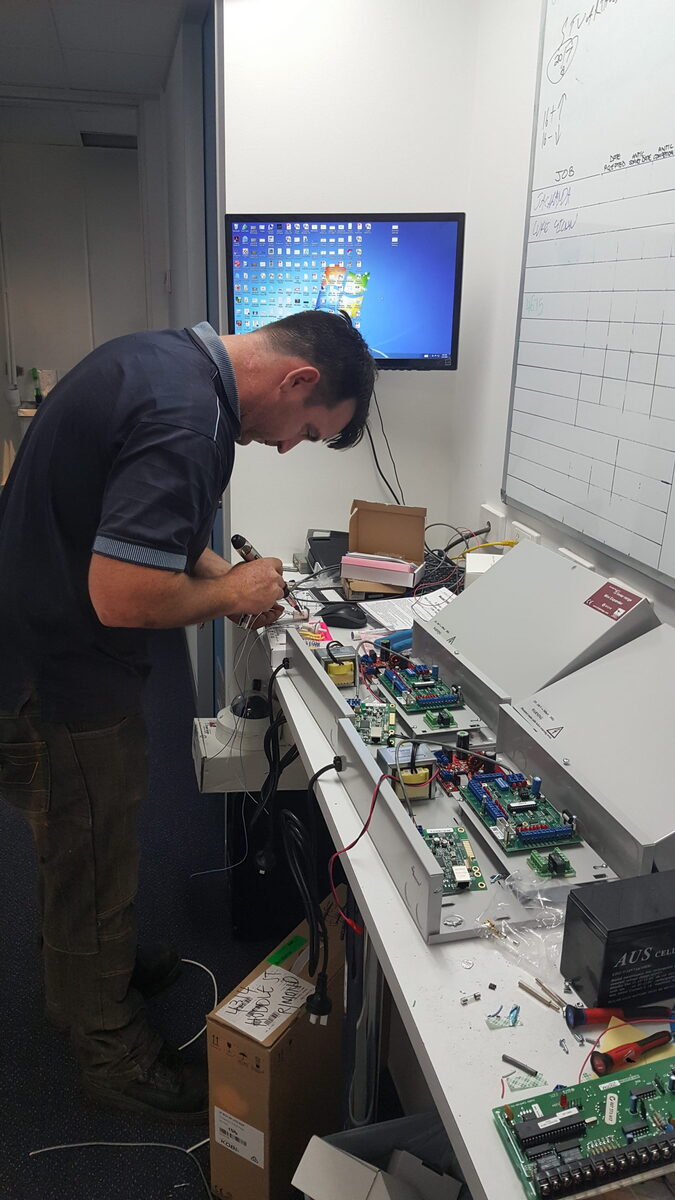
Since 2006
Why Bowen Hills Sites Choose Access Alarms for Access Control
We fit access control to how a site is run, which on an industrial property means designing around vehicles, shifts and contractors rather than a reception desk and a lift lobby. Practically, that means readers mounted where a driver can reach them from a cab, gate and shutter control that fails in a safe and sensible way, credential groups that match roles instead of individuals, and schedules built from your real start times. It also means handing over something you can run: you hold the administrator access, you can add and remove a credential yourself in under a minute, and the documentation names every door, gate and reader. Where access control needs to work alongside alarm areas, so arriving staff disarm their part of the site automatically, we build that as one system rather than two.
- If a driver stopped working for your supplier tomorrow, could you remove their access today — and would you know to?
- Can you produce a list of who opened the yard gate between midnight and 6am last Tuesday?
- How many people know the gate code, and when was it last changed?
- Does anyone other than your installer hold the administrator login for the system?
We are responsible for the access control system, its programming, its logs and its servicing. Door and gate mechanical hardware, fire system interfaces and your obligations as an employer on site safety sit with other trades and advisers; we will tell you where the line falls and who you need.
Common Access Control Problems We Solve in Bowen Hills
One gate code is known by every driver, supplier and former employee
Why it happens
A keypad was the cheapest way to let vehicles in, and a single code was the simplest way to run it. It then spreads exactly as you would expect: driver to driver, written in a cab, texted between depots, passed on when someone changes employer. Changing it means telling everybody, so it never gets changed.
Why it matters
A shared code is not access control, because it identifies nobody. Everyone who has ever been given it still has access, including people who left years ago and companies you no longer deal with. If a load goes missing or a gate is opened overnight, the log shows only that the correct code was entered, so every investigation stalls immediately and nobody can be either implicated or cleared.
What we do
We move drivers and suppliers onto individual credentials — a card, a fob, a phone credential or a personal PIN — so each use is attributable. Credentials are grouped by company and role, which means a supplier's whole group can be withdrawn in one action when a contract ends. Where a code still suits a particular case, it becomes a unique code per person with an expiry date on it, not a site secret.
The roller shutter goes up at 6am and stays up because the controls are awkward
Why it happens
The shutter button is inside, at the wrong end of the bay, or the remote lives in one particular forklift. Closing it between movements costs a walk and a wait, so once there is a second delivery coming it stays open. Nobody decided this; it is the path of least resistance, repeated daily until it is simply how the shutter is used.
Why it matters
An open shutter is an unobstructed opening into your stock, in full view of a street with constant traffic. It also defeats everything behind it: internal detection cannot be armed, a shutter position contact reports open all day so the signal becomes meaningless, and anybody walking in looks like they belong. Because it is the normal state, the risk never prompts anyone to act.
What we do
We make closing it the default. Shutter control gets put where it is actually used — a reader or button at the driver's position, a remote on each vehicle, or an automatic close on a timer you set. Position monitoring reports a shutter still open past a nominated time to a person, not just to a log. Where traffic genuinely needs the bay open for a period, we set that as a scheduled exception so the rest of the day still behaves properly.
A contractor needs the run of the site for a shutdown week
Why it happens
Shutdowns and maintenance windows are planned around the work, not the credentials. On the first morning somebody needs to get in, the quickest answer is a key or an existing card with wide permissions, issued informally and verbally. The job runs over, people swap crews, and the arrangement quietly outlives the week it was created for.
Why it matters
Temporary access that is never withdrawn becomes permanent access held by someone with no current reason to have it, and usually no record that they do. During a shutdown your normal supervision is absent and unfamiliar people are on site in numbers, which is precisely when you most want to know who went where. Afterwards nobody can reconstruct it, and the credential stays live until a tidy-up that may never come.
What we do
We issue credentials with a start and an end date, so access expires on its own without anyone remembering to cancel it. Contractors can be limited to the areas their work touches and the hours they are meant to be there, and each crew member gets their own credential so the log is attributable. You get a report of the week showing who used which entry and when, which is useful for the project as much as for security.
The yard was opened at 4am and nobody can say by whom
Why it happens
The gate is operated by a remote, a code or a key, none of which record anything. Even where a system does log events, the entries read as device numbers and raw timestamps, there is no routine of looking at them, and nobody has been given the job. The information either does not exist or cannot be found by the person who needs it.
Why it matters
Early-morning access is both completely normal and the hardest thing to verify, so it is where disputes concentrate — a load collected early, damage to a vehicle, a gate found open, an argument about whether a driver attended at all. Without an attributable record you are relying on recollection, and the people who need the answer are usually dealing with an insurer, a client or a staff matter where recollection is not enough.
What we do
Every controlled entry logs the credential, the entry and the time, with names rather than numbers because we set the system up with your people and companies in it. You can pull a plain list for any date range yourself, and we can send scheduled reports or alert a nominated person on defined events, such as a first opening before a set hour.
What We Design, Install and Support for Bowen Hills Access Control
Vehicle gate and shutter control
Readers, remotes and timed closing at the openings vehicles use, with position monitoring and held-open alerts.
Access controlDriver and contractor credentials
Individual cards, fobs or phone credentials grouped by company, with start and expiry dates built in.
Commercial security systemsIntercoms at gates and docks
Verify a driver before you open, from the office or a phone, at a gate or a loading dock station.
Commercial intercomsAccess tied to alarm areas
Arriving staff disarm only their part of the site, so shift starts do not depend on remembering a keypad.
Alarm monitoringServicing and system handover
Documented doors and readers, administrator access in your hands, and scheduled servicing on the hardware.
ServicingStart with who should be able to get in
The useful first conversation is not about equipment. It is a list of the groups who come onto your site, the entries each should be able to use, and the hours that should apply.
If storm season is on your mind, our guide to your alarm system during a cyclone covers how to prepare a site that depends on powered gates.
Commercial security specialist since 2006
We design, install, monitor and service commercial security across Brisbane, and we take over systems other companies installed.
Bowen Hills Access Control: Frequently Asked Questions
Can you put access control on an existing gate and roller shutter?
How should we handle credentials for drivers and contractors?
Can the system handle shift starts and different hours for different people?
What happens to the gates and doors in a power cut?
Can we get a record of access after an incident?
Bowen Hills Service Area
Access Alarms for Bowen Hills
- Business
- Access Alarms QLD Pty Ltd
- Phone
- 1300 049 969
- info@accessalarms.com.au
- Office
- 2/789 Kingsford Smith Drive, Eagle Farm QLD 4009
- Hours
- Mon - Fri: 8:30am - 5:00pm
Explore More Access Control and Entry Services
Service areas

Request a Security Quote in Bowen Hills
Tell us about your property in Bowen Hills and we'll recommend the right system. Free quote, no obligation.