Factory Security Systems Brisbane
Office, production floor and plant room designed as separate zones
since
Monitoring
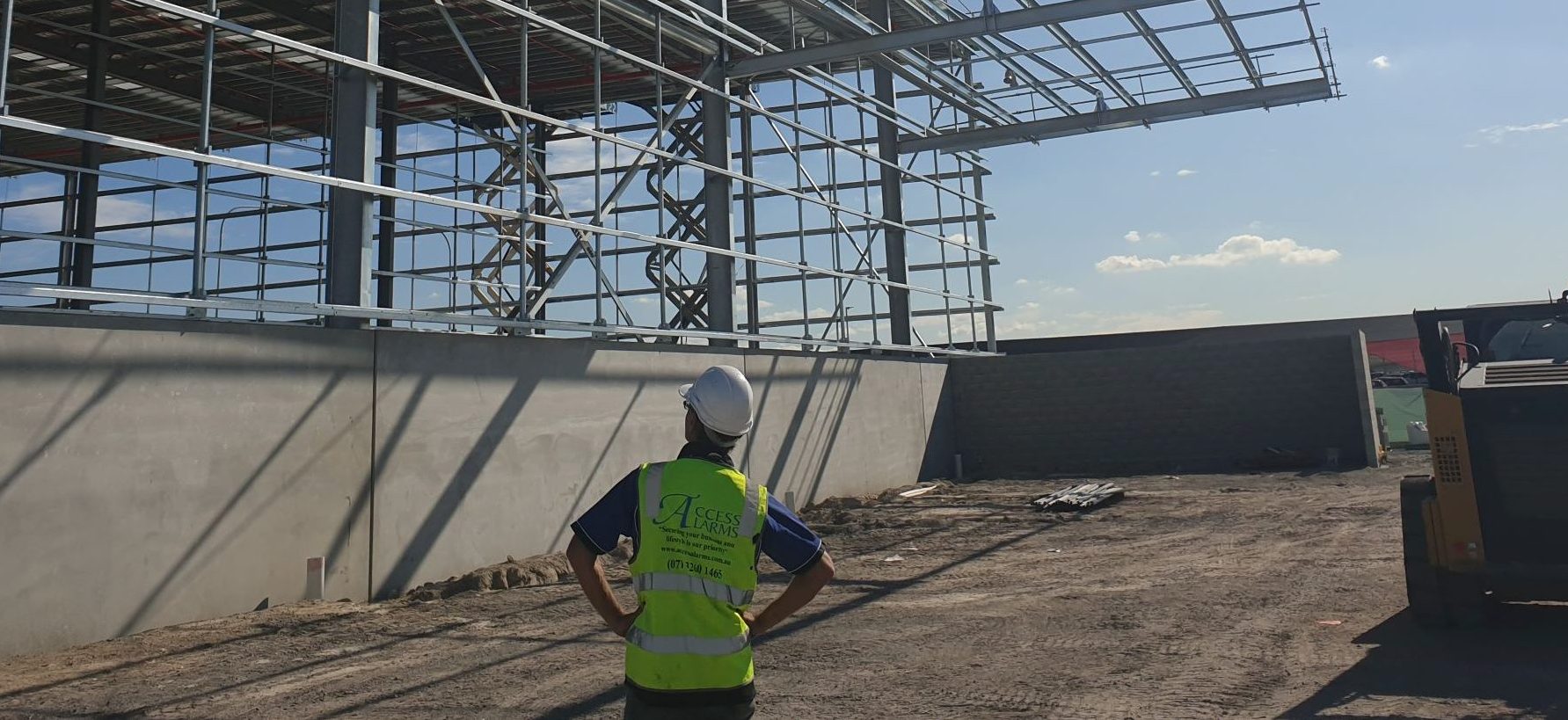

A working factory is not one space. The front office, the production floor and the plant or switch room carry different consequences of loss, different environments and different people with a reason to be there, and a single site-wide spec ignores all three. Access Alarms names food manufacturing facilities among the industrial site types it has worked on, and states that factories present security challenges most standard systems are not designed for. The business names dust, heat and moisture as the conditions that make an industrial site require a different approach. So a factory brief starts with the areas and what each one does to the equipment in it, not with the building.
Stand on a production floor during a shift and the difference from an office is obvious. The office empties at five, the line runs until eleven, a fitter is in the plant room at two in the morning, and the air in between carries dust, heat and moisture that a standard system was never drawn for. This page is built around two questions. Will cameras and detectors survive dust, heat and wash-down in a production area, and can a contractor be let into the plant room without being handed the whole site. Both have an honest answer from what the business actually publishes, and this page marks the point where that answer stops.
Why Factory Security Systems Matter in Brisbane
Brisbane Economic Development Agency, Brisbane City Council's economic development agency, describes Brisbane as the nation's beef processing capital, home to a majority of Australia's major export-certified abattoirs and processing facilities, inside a wider advanced manufacturing base it says spans food and beverage, biopharmaceuticals, robotic automation and aerospace. That is an investment-attraction description rather than a statistical release, and it says nothing about crime.
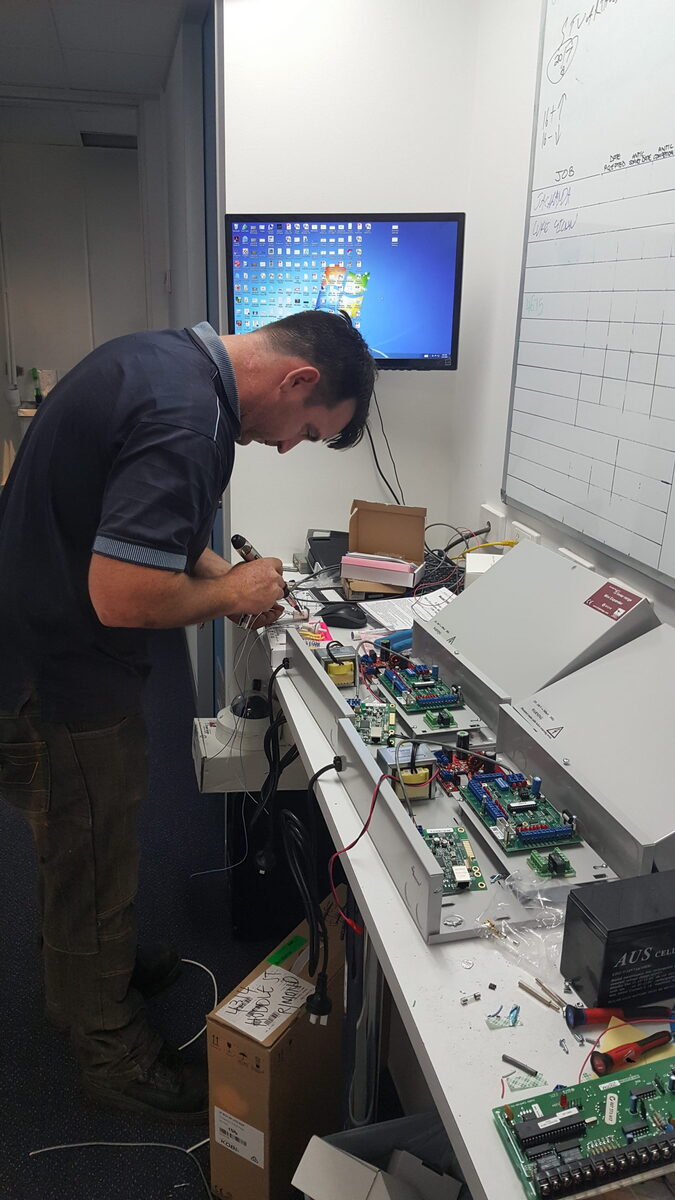
Since 2006
Why Brisbane Businesses Choose Access Alarms
Trust on this page rests on what the business publishes, and that is a short list. Access Alarms lists food manufacturing facilities among the industrial site types it has worked on, and states that factories present security challenges most standard systems are not designed for. On the production side the inputs reach exactly one site: Moco Food Services' Wacol facility, which Moco's own website describes as running meat manufacturing and processing. That is a fact about the site, not a description of work at it, and nothing is claimed here about which part of it was ever worked on. Nothing published gives a floor area, zone count, camera count, date, system type or outcome for a single factory job, so none appears here. What is published is capability: cameras and detectors specified for the conditions, IP66 or IP67 housings for wet or dusty areas, industrial-grade equipment for temperature swings, and access control by reader, fob, PIN code and smartphone. On speed, Access Alarms says it reaches most Brisbane metro jobs within 30 minutes from its Eagle Farm office; that is its own claim rather than a measured figure, and nothing here is offered as a response guarantee.
Two answers move a factory design more than a floor plan does. The first is what each area is actually cleaned with, because that is where the published IP66 or IP67 specification meets its honest limit and the design either accounts for sanitation or does not. The second is whether any part of the plant is a classified area - nothing published here is offered for one, so raise it at the walk and the design is set around that boundary rather than through it. Bring both, with a rough area list and who needs access to which area, and the quote that follows is built on the site rather than on a floor area. Book a technician, or call the Eagle Farm office.
Visit Our Eagle Farm Office
Access Alarms
- Business
- Access Alarms QLD Pty Ltd
- Phone
- 1300 049 969
- info@accessalarms.com.au
- Office
- 2/789 Kingsford Smith Drive, Eagle Farm QLD 4009
- Hours
- Mon - Fri: 8:30am - 5:00pm
Common Security Problems We Solve
The factory was quoted as one space
Why it happens
A site-wide package is quicker to price than a zoned design, so the front office, the production floor, the plant room and the stores end up with the same detection and the same treatment.
Why it matters
The areas with the worst consequences of loss are protected to the same level as a reception desk, and when something goes off nobody can say which part of the building it came from.
What we do
The fix is sequencing: the site walk separates office, production floor, plant room and stores before any device is chosen, which is exactly what the Class provision in AS/NZS 2201.1:2007 leaves room for. No Access Alarms installation is claimed as certified or compliant to any class of that standard.
Detectors nuisance-trip on heat, steam and moving plant
Why it happens
Devices placed by an office rule of thumb end up facing an oven bay, a chiller door or a machine that cycles on its own, in air carrying dust, oil mist and steam.
Why it matters
Staff stop trusting the panel, or a zone gets isolated 'until someone looks at it' and stays isolated, which quietly removes the detection that was paid for.
What we do
The published specification is cameras and detectors rated for the conditions, IP66 or IP67-rated housings for wet or dusty areas, and industrial-grade alarm equipment that handles temperature swings. Chosen area by area rather than site-wide, that is a design decision, not a catalogue line.
Nobody is sure what the camera rating actually covers
Why it happens
IP66 and IP67 read like a single weatherproof badge, when the second digit of an IP rating is exactly what changes between hosing an area down and sanitising it with high-pressure hot water or steam.
Why it matters
A housing specified for dust and water jets, then installed where the area is sanitised at the end of every shift, fails on a schedule nobody planned for.
What we do
Access Alarms publishes IP66 or IP67 housings for wet or dusty areas. Under the IP Code, protection against high-temperature, high-pressure wash-down and steam cleaning is a separate and higher rating denoted by the digit 9. So the design question is what each area is actually cleaned with, and no camera or detector is offered here as wash-down or steam-cleaning rated.
Maintenance contractors end up with a key to everything
Why it happens
A fitter, a refrigeration technician or a calibration contractor needs the plant room outside production hours, and the fastest answer is a key or a code that happens to open the rest of the site as well.
Why it matters
Restricted areas on a production site are restricted for safety as much as for value - a plant room, a switchroom, a chemical store, a guarded machine cell - and when something is damaged, contaminated or missing there is no record of who was where.
What we do
Access Alarms publishes access control by card reader, key fob, PIN code and smartphone, controlling who enters and when. Area-by-area permissions, time-of-day scheduling, temporary contractor credentials and access reporting are the obvious next questions and are not published, so confirm those with us rather than assuming them.
What We Design, Install and Support
Zoned Alarm Design for a Production Site
Detection device selection and alarm zoning across the areas of a single site.
On a factory the areas separate themselves once you walk them: the front office, the production floor, the plant or switch room, the tool store and the raw-material or chemical store, each with its own access population and its own consequence of loss. They are worth designing as areas rather than as one building, which is the whole difference between a zoned system and a site-wide package.
Book a technicianCameras and Detectors for the Process Environment
Camera and detection hardware specified against the physical conditions of each area.
The published specification is cameras and detectors rated for the conditions, IP66 or IP67-rated housings for wet or dusty areas, and industrial-grade alarm equipment that handles temperature swings. Read the boundary with it: under the IP Code, protection against high-temperature, high-pressure wash-down and steam cleaning is a separate and higher rating, denoted by the digit 9, and no equipment is offered here on that basis.
Discuss the environmental specAccess Control for Plant Rooms and Restricted Areas
Credential-based entry control using readers, fobs, PIN codes and smartphone access.
Access Alarms publishes access control that determines who enters and when, by card reader, key fob, PIN code and smartphone. On a production site the restricted areas are restricted for safety as well as value, which is why the plant room, the switchroom and the chemical store belong on their own access list rather than on the site key. Area-by-area permissions, scheduling, temporary contractor credentials and access reporting are not published capability and should be confirmed with us before you rely on them.
Ask about restricted-area accessAsk Any Installer for a Documented Risk Assessment
What AS/NZS 2201.1:2007 asks of an installer before a system design is set.
Under AS/NZS 2201.1:2007 the assessment of risk sits with the installer, is written down jointly with the client, and the resulting Class is chosen with the client's agreement. Access Alarms publishes no risk-assessment service and none is offered here as one - this is a requirement the standard puts on whoever installs, and a fair thing to ask of anyone who quotes a factory, us included.
Book a technician24/7 Alarm Monitoring
Connection of the site alarm system to a monitoring centre operating around the clock.
Ask about monitoringServicing and Upgrades
Assessment, servicing and upgrade of an existing security system, including systems installed by another company.
Book a system assessmentCommercial security specialist since 2006
We design, install, monitor and service commercial security across Brisbane, and we take over systems other companies installed.
Need a security assessment for your commercial property? We'll recommend the right system.
Frequently Asked Questions
Do cameras and detectors survive dust, heat and wash-down in a production area?
Can we restrict contractors to the plant room without giving them the whole site?
Can the office and the production floor be on different alarm zones?
Do you work on food manufacturing sites in Brisbane?
What should we have ready before the site walk?
Explore More Commercial Security
All commercial securityService areas
Sources
- Brisbane Economic Development Agency (Choose Brisbane), Advanced Manufacturing in Brisbane. An investment-attraction publication of Brisbane City Council's economic development agency, not a statistical release.
- Gallagher, Demystifying Class 5 intruder alarm systems (AS/NZS 2201 Class 1 to Class 5 scale)
Protect Your Business
Get a security assessment for your commercial property. Free quote, no obligation.