Access Control Systems Brisbane
Cards, fobs, PINs, dual-factor readers and phone access for Brisbane businesses, installed and supported from our Eagle Farm office.
since
Monitoring
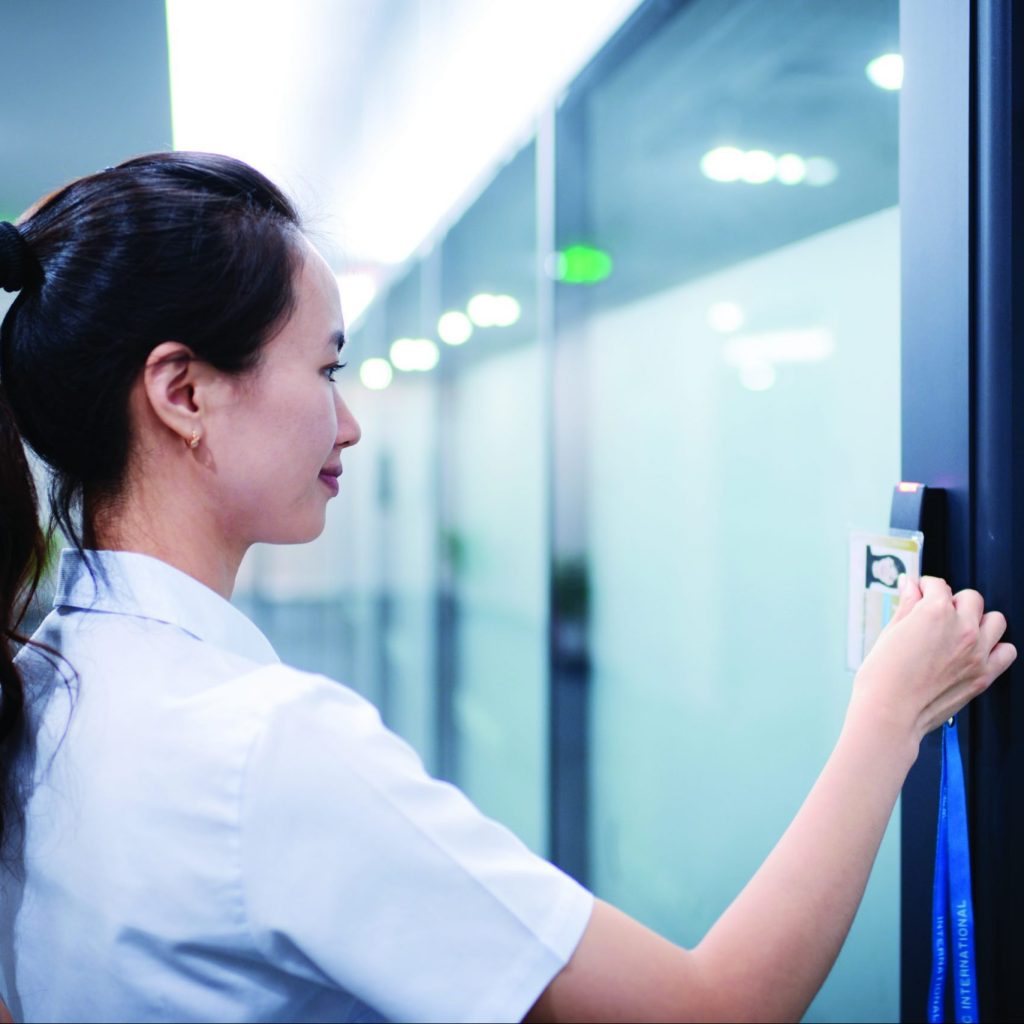

In the year to February 2026, 8.3% of employed Queenslanders changed their employer or business. On mechanical keys, roughly one in twelve people leaving is one more key that may not come back, and the only real fix is rekeying. A credential system changes that arithmetic: a lost or withdrawn card, fob or phone credential is deactivated in the management software in a few minutes, with no locks changed. Access Alarms has installed commercial security around Brisbane since December 2006 from an office at Eagle Farm, and designs access control to run with alarms, CCTV and intercoms so every access event is logged on one system. Book an assessment of your doors below.
Access control is one question asked over and over: who can open which door, and when. Brisbane businesses come to it when the key ring stops matching the staff list – shift workers, cleaners, maintenance contractors and after-hours deliveries all need a way in, and none of them should need the same key as the person who opens the cash office. Customers put it bluntly: how do I stop ex-staff still having keys? A credential system answers that with one record per person, and the credential can be a proximity card, a key fob, a PIN, a dual-factor card-plus-PIN reader on a high-security zone, or a smartphone for sites moving away from physical cards. Access Alarms designs, installs and services those systems across Brisbane and South East Queensland.
Why Access Control Systems Matter in Brisbane
Keys are a fixed asset in a workforce that is not. The Australian Bureau of Statistics put Queensland's job mobility rate at 8.3% for the year to February 2026 - the share of employed people who changed their employer or business - with 2.1 million Australians leaving or losing a job in the same period. Churn is not spread evenly: accommodation and food services and health care and social assistance had the largest shares of job changers, at 12.5% each. Run a Brisbane venue, childcare service, clinic or depot on mechanical keys and that figure is the problem in one number: roughly one in twelve people on the payroll moved on, and every departure is a key returned, a key quietly kept, or a rekey invoice.
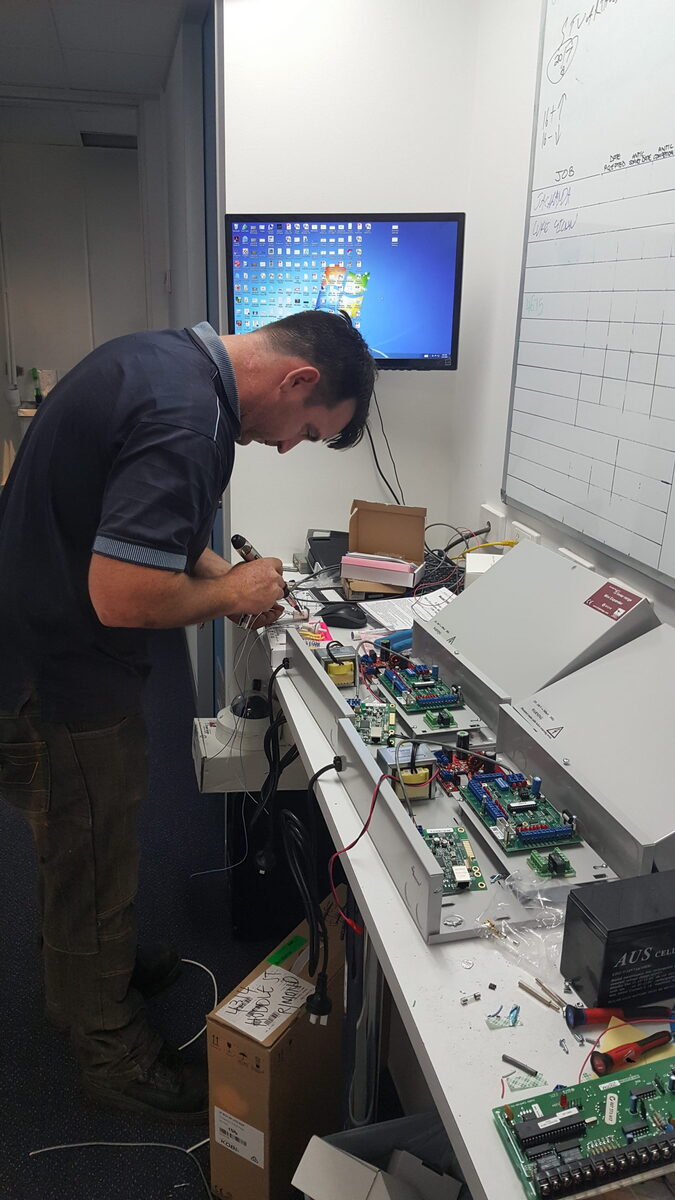
Since 2006
Why Brisbane Businesses Choose Access Alarms
Access Alarms is a locally owned Brisbane security installer, operating since December 2006, working from an office at 2/789 Kingsford Smith Drive, Eagle Farm, and covering Brisbane and South East Queensland. On access control specifically, the proof we can point at is our own published work: a public operating guide for ICT's Protege WX, written for the people who use the system day to day, on a platform we have installed many times. We work with major access control platforms including ICT, Inner Range, Hills and Salto - that is the range we work with, not an accreditation or authorised-installer status with any of them. Our technicians are licensed and insured, and because installing access control in Queensland requires a security equipment installer licence issued through the Office of Fair Trading, you should ask us for those details in writing rather than take the badge on trust. We also state that we are trusted by more than 100 businesses and that we reach most Brisbane metro jobs within 30 minutes of Eagle Farm; both are our own figures and neither is a guaranteed response time.
Book an assessment before the next resignation rather than after it. Queensland's job mobility rate was 8.3% for the year to February 2026, so the next departure is a matter of timing: on mechanical keys it is a rekey, on credentials it is a few minutes in the management software. Bring your door list. Which doors need a dual-factor reader rather than a tap card, and which doors sit on an exit path and have to be assessed with your certifier and fire safety people, are the two conversations worth having before anything is quoted. Call 1300 049 969 or use the form below and tell us how many doors and how many staff you have.
Visit Our Eagle Farm Office
Access Alarms
- Business
- Access Alarms QLD Pty Ltd
- Phone
- 1300 049 969
- info@accessalarms.com.au
- Office
- 2/789 Kingsford Smith Drive, Eagle Farm QLD 4009
- Hours
- Mon - Fri: 8:30am - 5:00pm
Common Security Problems We Solve
Keys that do not come back when someone leaves
Why it happens
Queensland's job mobility rate was 8.3% for the year to February 2026, and 2.1 million Australians left or lost a job over the same period. Customers ask the question in exactly those terms: how do I stop ex-staff still having keys?
Why it matters
A mechanical key cannot be cancelled. Every uncollected key is either an open door or a rekey, and on a site with sub-masters the rekey cost grows with each departure.
What we do
On a credential system, a lost or withdrawn card, fob or phone credential is deactivated in the management software in a few minutes, without changing locks or re-keying. Our own Protege WX guide shows the step for an office manager to do it themselves: log in, find the tag, remove it.
No record of who opened which door, and when
Why it happens
Mechanical keys leave no trace. Nothing is recorded unless somebody signs a book, and nobody signs a book at 11pm.
Why it matters
Stock discrepancies, after-hours entries and 'who let the contractor in' questions become an afternoon of guesswork, with no evidence either way.
What we do
Access events are logged with a timestamp and the person's credential, and access control can be integrated with the alarm system and cameras so every event lands on one timeline; the data can also be exported for time and attendance tracking. ICT states Protege WX logs all access attempts, successful and unsuccessful, which is what turns a log into an early warning that a door is being tested.
Contractors, cleaners and couriers who need to get in once
Why it happens
Cleaning, maintenance and delivery work happens outside office hours, and the usual workaround is lending a key or leaving a door on the latch.
Why it matters
A lent key is an uncontrolled key, and a latched door defeats the alarm and leaves no record of who came in.
What we do
Customers ask whether they can open the door from their phone; on Protege WX the door is unlocked by tapping its button in the app, which our guide describes as almost instant and working over a 4G connection. Where the visit is regular, a credential with its own hours is the alternative to a lent key - the guide shows programming the hours the workplace is open, such as 8.30am to 5.30pm, Monday to Friday.
One credential type used on every door in the building
Why it happens
Access control gets bought as a product rather than designed against risk, so the front door reader and the comms room reader end up identical.
Why it matters
A tap card on the front door is convenience. The same card opening a server room, a cash office or a secure store means one lost card exposes everything behind those doors at once.
What we do
Credentials are matched to what is behind the door: proximity cards and key fobs on general doors, PIN pads where an area simply needs a code, dual-factor card-plus-PIN readers for high-security zones, and smartphone access for businesses moving away from physical cards. Mixing credential types across one system is normal.
Nobody can say what the doors will do in a fire alarm or a blackout
Why it happens
Buyers ask it directly - what happens to the doors in a power failure or an evacuation? Put the same question to anyone quoting on your doors: which of these doors sit on a required exit path, and what is each of those doors meant to do when the fire alarm sounds or the power drops out?
Why it matters
Under the National Construction Code, a door in a required exit must be readily openable without a key from the side that faces a person seeking egress, by a single downward or pushing action that can be done with one hand. Separately, the Building Fire Safety Regulation 2008 (Qld) puts the duty on the occupier of a building to ensure a door on an evacuation route is not locked while a person is inside on the internal side of it, and makes locking such a door an offence. That duty stays with the occupier, whoever installs the hardware.
What we do
We treat egress as an assessment item, not a product feature. The NCC permits an electronic locking device on an exit door only under specified conditions - among them that it is controlled by a fail-safe device connected to an approved automatic fire detection or sprinkler system, that it automatically unlocks if there is a power failure to the device, and that the locking device is approved by the appropriate authority. Whether any particular door can meet those conditions requires assessment on your building with your certifier and fire safety people, so we do not prescribe fail-safe or fail-secure locking for a door on a web page, and we do not certify egress compliance.
'Licensed and insured' with nothing a buyer can actually check
Why it happens
Security providers advertise licensing as a badge. We describe our technicians as licensed and insured too, but a badge is not something you can verify from a website.
Why it matters
In Queensland, installing, repairing, servicing or maintaining access control devices requires a security equipment installer licence issued through the Office of Fair Trading under the Security Providers Act 1993, and the licence expressly authorises work on electric, electro-magnetic and biometric access control devices. An unlicensed installer on your doors becomes a problem you inherit.
What we do
Ask us for our licence details in writing before you engage us, and ask the same of every other installer quoting on the job. We also make no accreditation, dealer or authorised-installer claim for any access control brand.
What We Design, Install and Support
Access Control Design and Installation
Readers, controllers, door hardware and management software specified, installed and commissioned for commercial sites. The design work that decides the job is the door schedule: which doors everyone uses, which protect something, and which sit on a required exit path. The NCC permits an electronic locking device on an exit door only under set conditions, including fail-safe control connected to an approved automatic fire detection or sprinkler system and approval by the appropriate authority, so those doors are assessed with your certifier before hardware is chosen rather than after it is installed.
Credentials: Cards, Fobs, PINs, Dual-Factor and Mobile
Proximity cards, key fobs, PIN pads, dual-factor card-plus-PIN readers and smartphone-based access. You are not picking one credential for the whole site. Proximity cards and fobs suit doors everyone uses, PIN pads suit areas that just need a code, dual-factor card-plus-PIN suits a server room or secure store, and smartphone access suits businesses moving away from physical cards. ICT supports encrypted cards, fobs and mobile credentials on the same platform.
Integration With Alarms, CCTV and Intercoms
Access control designed to run with your alarm, camera and intercom systems rather than beside them. Every access event is logged with a timestamp and the credential used, and integrating access with the alarm and cameras puts badge-ins and access events on one timeline; access control also works alongside commercial intercom systems. That is what turns an after-hours question into a short check instead of an afternoon.
System Administration and Handover
System setup, user administration and handover so your own staff can add and remove people without a callout. ICT's Protege WX runs from a built-in web server with no software to install, reachable from the office, from home or on the road, and our own guide shows how to remove a lost key tag and how to programme the hours a workplace is open, such as 8.30am to 5.30pm Monday to Friday. Onboarding and offboarding staff is meant to be an office task, not a service call.
Servicing and Upgrading Existing Systems
Servicing, fault-finding and staged upgrades of access control hardware already installed on site. If your building already runs another platform, ask before you replace it. We work with major access control platforms including ICT, Inner Range, Hills and Salto - a list of what we work with, not an authorised-installer or accreditation claim - so raise your specific controller and readers and we will tell you what can be serviced or extended.
Commercial security specialist since 2006
We design, install, monitor and service commercial security across Brisbane, and we take over systems other companies installed.
Need a security assessment for your commercial property? We'll recommend the right system.
Frequently Asked Questions
How do I stop an ex-employee who still has a key from getting back in?
Can I open the door from my phone?
What happens to the doors in a power failure or an evacuation?
Does access control have to be installed by a licensed installer in Queensland?
What about fingerprint or other biometric readers?
How many doors and users can one system handle?
Do we have to call you out every time a staff member starts or leaves?
Protect Your Business
Get a security assessment for your commercial property. Free quote, no obligation.