Commercial CCTV Systems Brisbane
Cameras specified around one question: will this footage actually identify someone?
since
Monitoring
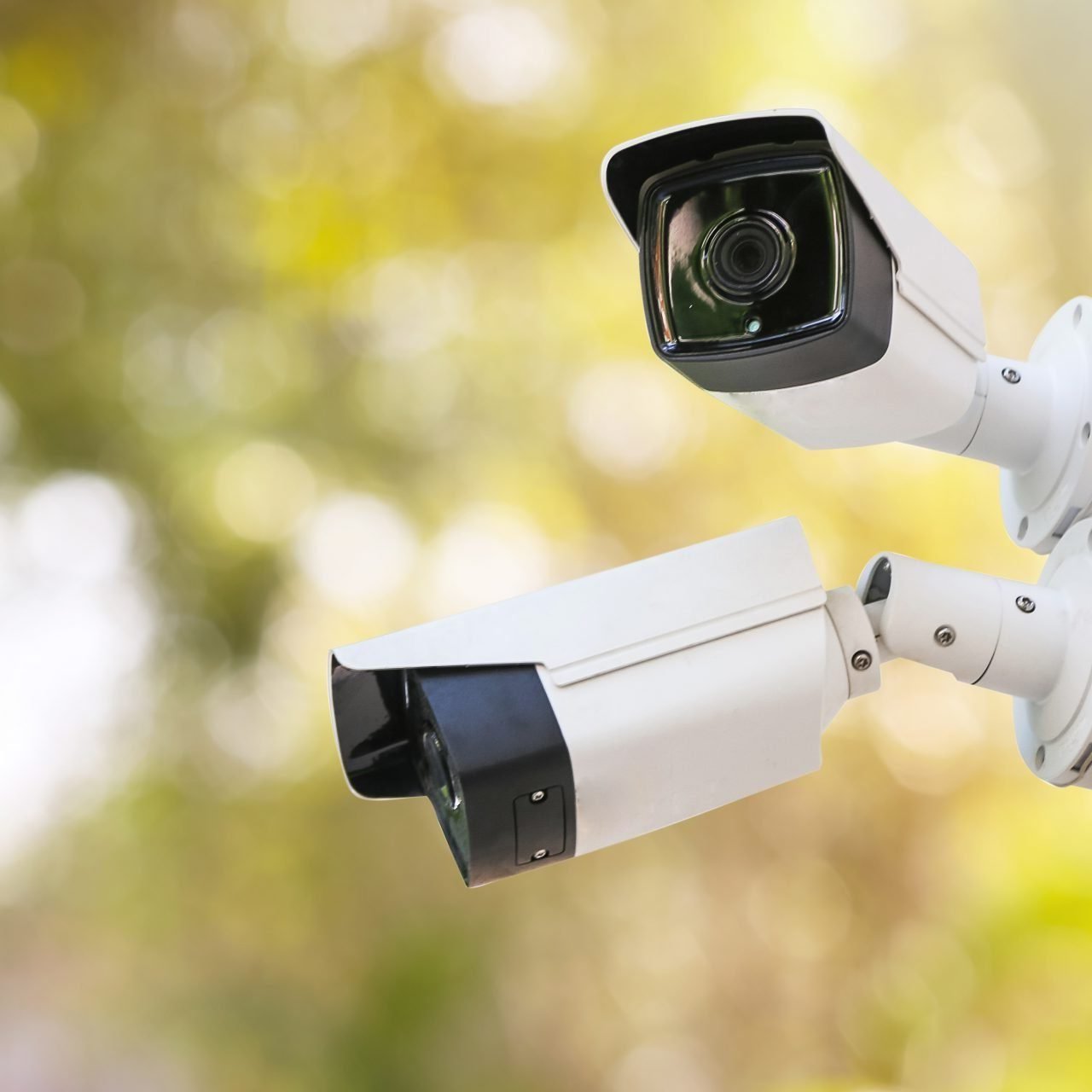
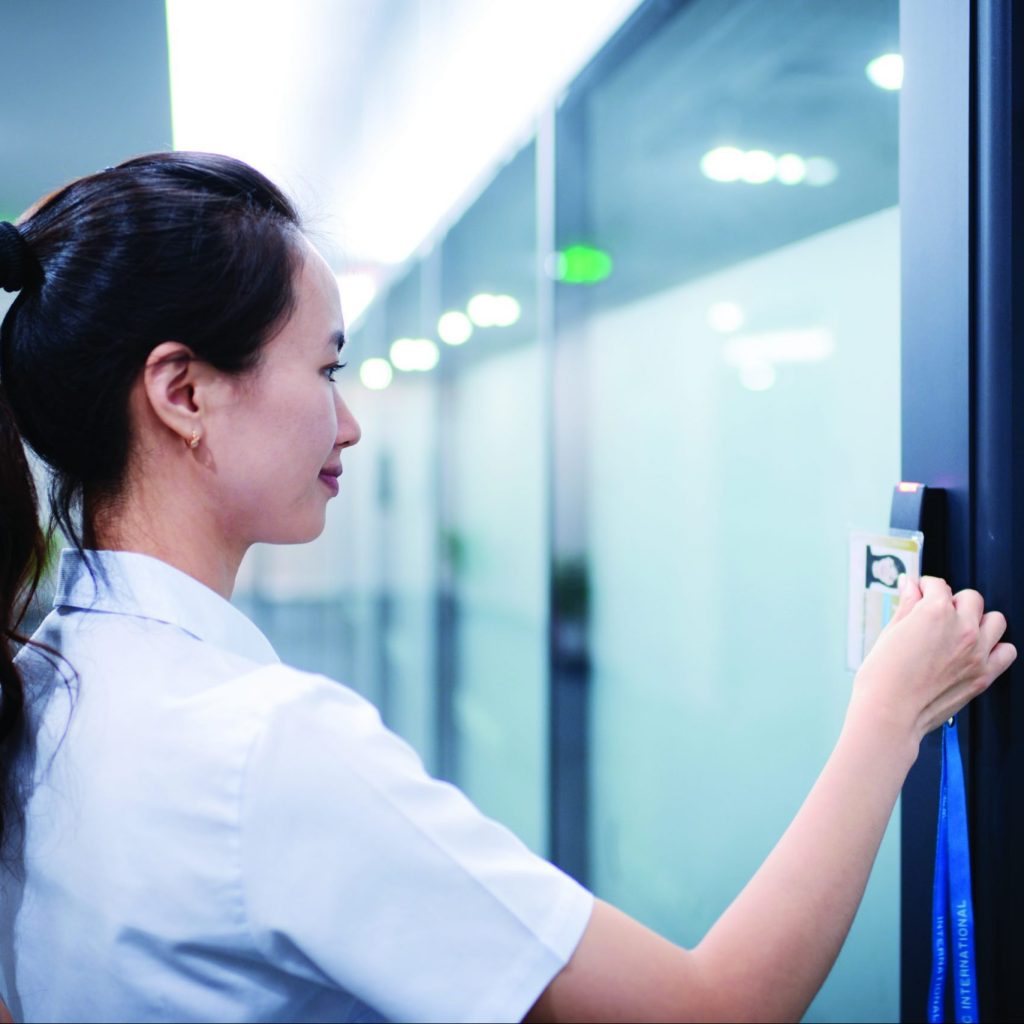
Most Brisbane commercial sites already have cameras. Fewer have footage that answers the question that matters on the day something happens: can anyone actually be identified? Australian Institute of Criminology research into police use of rail-network CCTV in New South Wales found around one in three investigators struck problems with image quality or camera coverage. Access Alarms has traded as a commercial security specialist since 2006 and works from its Eagle Farm office in Brisbane, covering dome, bullet, PTZ, licence plate recognition and 4K IP cameras with infrared and low-light capability. Two decisions do most of the work on any quote, ours included: what each camera has to achieve, and how long the recording is kept.
A common Brisbane assumption is that if something happens out the front, the council cameras will have caught it. Brisbane City Council does operate more than 4,500 permanent, temporary and mobile safety cameras, but the network is concentrated on places like the Queen Street Mall, Council car parks, libraries, ferry terminals and some parks rather than private commercial frontages – and Council does not provide footage directly to members of the public, who must lodge a Right to Information request. Whatever happens at your own entrance, counter or car park has to be recorded by you.
Queensland Government Statistician’s Office crime reporting for 2024-25 also indicates that recorded property offences are dominated by theft other than unlawful entry, and that unlawful entry itself declined for a second consecutive year. If most loss is theft rather than forced entry, a camera plan built only around the back door and the fence line is aimed at the wrong problem. Before you spend anything, you can look up your own suburb, offence type and date range on the Queensland Police Service Online Crime Map, which is updated daily.
Why Commercial CCTV Systems Matter in Brisbane
Two things decide whether a commercial camera system earns its cost: whether an image is good enough to identify a person, and whether the recording still exists when the loss is discovered.
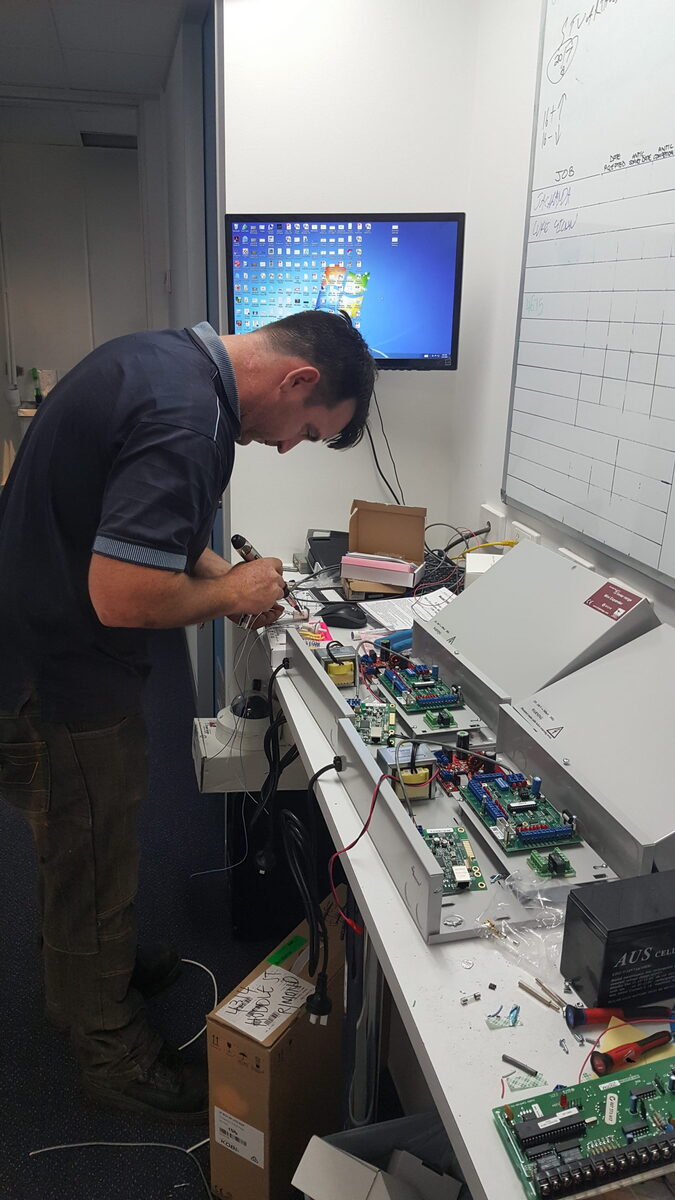
Since 2006
Why Brisbane Businesses Choose Access Alarms
Access Alarms has traded as a commercial security specialist since 2006 and works from a real Brisbane office at 2/789 Kingsford Smith Drive, Eagle Farm, open Monday to Friday, 8:30am to 5:00pm. Eagle Farm is a commercial and industrial precinct in inner-north Brisbane, so the office sits inside the customer base this page is written for. The camera and video management lines named on our own site are Dahua, Hikvision, Bosch and Milestone; we work with them rather than claiming any partner accreditation, and we publish our own Hik-Connect setup guide for customers who want to view cameras from an Android phone. Our site describes the business as licensed and insured; because no licence number is published there yet, please verify us - and anyone else quoting - on the Queensland Office of Fair Trading register, which shows a security provider's licence status, number, class and expiry free of charge.
Whoever you hire, get two things in writing before you sign: what each camera is expected to achieve at its position - identify, recognise or observe - and the recording mode and retention window the storage has been sized around, rather than a number inherited from a default. Ask us for both, and ask every other quote on your desk for the same. Book a technician online, or call the Eagle Farm office on 1300 049 969, Monday to Friday, 8:30am to 5:00pm.
Visit Our Eagle Farm Office
Access Alarms
- Business
- Access Alarms QLD Pty Ltd
- Phone
- 1300 049 969
- info@accessalarms.com.au
- Office
- 2/789 Kingsford Smith Drive, Eagle Farm QLD 4009
- Hours
- Mon - Fri: 8:30am - 5:00pm
Common Security Problems We Solve
There is footage of the incident, but nobody in it can be identified
Why it happens
The system was bought on camera count and price rather than on what each camera has to achieve, so lens choice, mounting height, field of view and low-light performance were never specified against a job
Why it matters
Australian Institute of Criminology research on police use of rail-network CCTV in New South Wales found around one in three investigators encountered problems with image quality or coverage, and our own upgrade guidance is blunt that no amount of zooming in will fix an image after the fact
What we do
Ask any installer quoting you, us included, to say on paper what each camera is expected to do - identify a face, read a plate, or observe an area - before you compare prices; the range we select from covers dome, bullet, PTZ, licence plate recognition, HD and 4K IP cameras and infrared or low-light capability
By the time the loss is found, the footage has already been recorded over
Why it happens
Retention was left at whatever the recorder shipped with, because storage depends on camera count, resolution, frame rate, drive size and continuous versus motion-only recording, and nobody did that arithmetic before the quote
Why it matters
Losses of this kind are often discovered well after they happen rather than the next morning, so a short recording window quietly decides the outcome before anyone looks
What we do
Retention is a design output, not a fixed feature: decide the window you need, then have any quote show you the camera count, resolution, frame rate, drive size and recording mode behind it - motion-only recording is one of the levers, and we offer it where it buys useful extra days
An ageing analogue system, and the assumption that going digital means rewiring the building
Why it happens
The cost fear on an established site is cabling, not cameras, so owners defer the upgrade and keep patching a system that no longer produces usable images
Why it matters
A site can spend years paying for a system it cannot use as evidence, when the migration may be far cheaper than assumed
What we do
Our published upgrade guide explains that HD-over-coax can often carry modern HD signals over the coaxial cable already in the building, subject to the cable's condition; our rule of thumb is to repair a system under five years old with a single component failure and to plan an upgrade past eight to ten years - our engineering judgement after inspection, not a standard
Relying on council or public cameras to cover the frontage
Why it happens
Brisbane City Council's safety camera network is visible around the city, so businesses assume the coverage extends to their own footpath and that footage can be requested if needed
Why it matters
Council runs more than 4,500 cameras but concentrates them on the Queen Street Mall, Council car parks, libraries, ferry terminals and some parks, and does not provide footage directly to members of the public - a Right to Information request is required, while law enforcement and government agencies use a separate form
What we do
Your own entrances, counter, car park and vehicle access points are only covered by cameras you own and control
Cameras go in with no signage and no agreed rules about who can view the recordings
Why it happens
Signage and recorder access are treated as optional extras at quoting time rather than as part of the install
Why it matters
Under the Privacy Act 1988, a covered organisation must tell people their image may be captured before they are recorded, keep that information secure, and destroy or de-identify it when it is no longer needed; the Act covers organisations turning over more than $3 million plus a defined list of businesses covered regardless of turnover, including health service providers
What we do
Those obligations translate into three lines worth writing into any installer's scope of work, ours included: signage at each entry, a named list of who can log into the recorder, and a retention setting you have agreed. What the law requires of your business is a question for your own adviser, not for an installer
No practical way to tell whether the installer quoting you is licensed
Why it happens
Security websites, including ours, commonly display a 'licensed and insured' badge without publishing a licence number, so buyers have nothing to check
Why it matters
Queensland regulates the security industry through the Office of Fair Trading under the Security Providers Act 1993, and a free public register shows a provider's licence status, number, class and expiry - so an unverifiable badge is the weakest possible version of a genuinely checkable fact
What we do
Ask us for the licence number, and ask every other installer quoting you for theirs, then check them yourself on the register; note the free online register is stated to be for information only and cannot be used as evidence in legal proceedings, with an official extract available for a fee if a tender requires proof
What We Design, Install and Support
Commercial CCTV design and installation
The range maps to specific spots on a Brisbane commercial site: a dome inside a reception, a bullet on an external door, a PTZ over a car park, licence plate recognition at the vehicle entrance, with IP66/IP67-rated housings and infrared where the light drops away after closing. Before you compare prices, ask for the job each camera is meant to do to be written down, because image quality cannot be recovered afterwards.
Book a technicianAnalogue to IP CCTV upgrades
Most established Brisbane commercial sites already have cameras, and the cost fear is cabling rather than hardware. HD-over-coax can often carry modern HD signals over the coaxial run already in the building, subject to the condition of that cable.
Read our upgrade guideLicence plate recognition and video analytics
Licence plate recognition at a vehicle entrance, plus motion-triggered recording, line-crossing alerts, loitering detection and people counting, turn hours of continuous video into events someone will actually review. Motion-only recording also stretches the recording window, which is part of the retention conversation rather than a separate upsell.
Book a technicianRemote viewing and handover training
Systems are commissioned, tested and handed over with user training, and viewed remotely by phone app or desktop software. We also publish our own step-by-step Hik-Connect setup guide for Android, which is the kind of practical support that matters when someone needs to check a Brisbane site after hours.
Book a technicianCommercial security specialist since 2006
We design, install, monitor and service commercial security across Brisbane, and we take over systems other companies installed.
Need a security assessment for your commercial property? We'll recommend the right system.
Frequently Asked Questions
How long is my footage kept before it is recorded over?
If something happens outside my premises, will the council cameras have it?
Can I point a camera at my staff?
Do I need signs telling people they are being recorded?
Do I have to rewire the whole building to move off analogue?
You say you are licensed - can I check that?
Can I view the cameras from my phone?
What happens after the cameras are installed?
Sources
- Brisbane City Council - Safety Camera Network (CCTV) footage
- Queensland Government Statistician's Office - Recorded crime (Crime report, Queensland, 2024-25)
- Office of the Australian Information Commissioner - Security cameras
- Office of the Australian Information Commissioner - Workplace monitoring and surveillance
- Queensland Department of Justice - Civil surveillance reforms consultation (QLRC Report No. 77)
Protect Your Business
Get a security assessment for your commercial property. Free quote, no obligation.