Commercial Security Systems Spring Hill
Most commercial floor space in Spring Hill was never built as commercial floor space, and security has to be designed for the building you actually occupy.
since
Monitoring

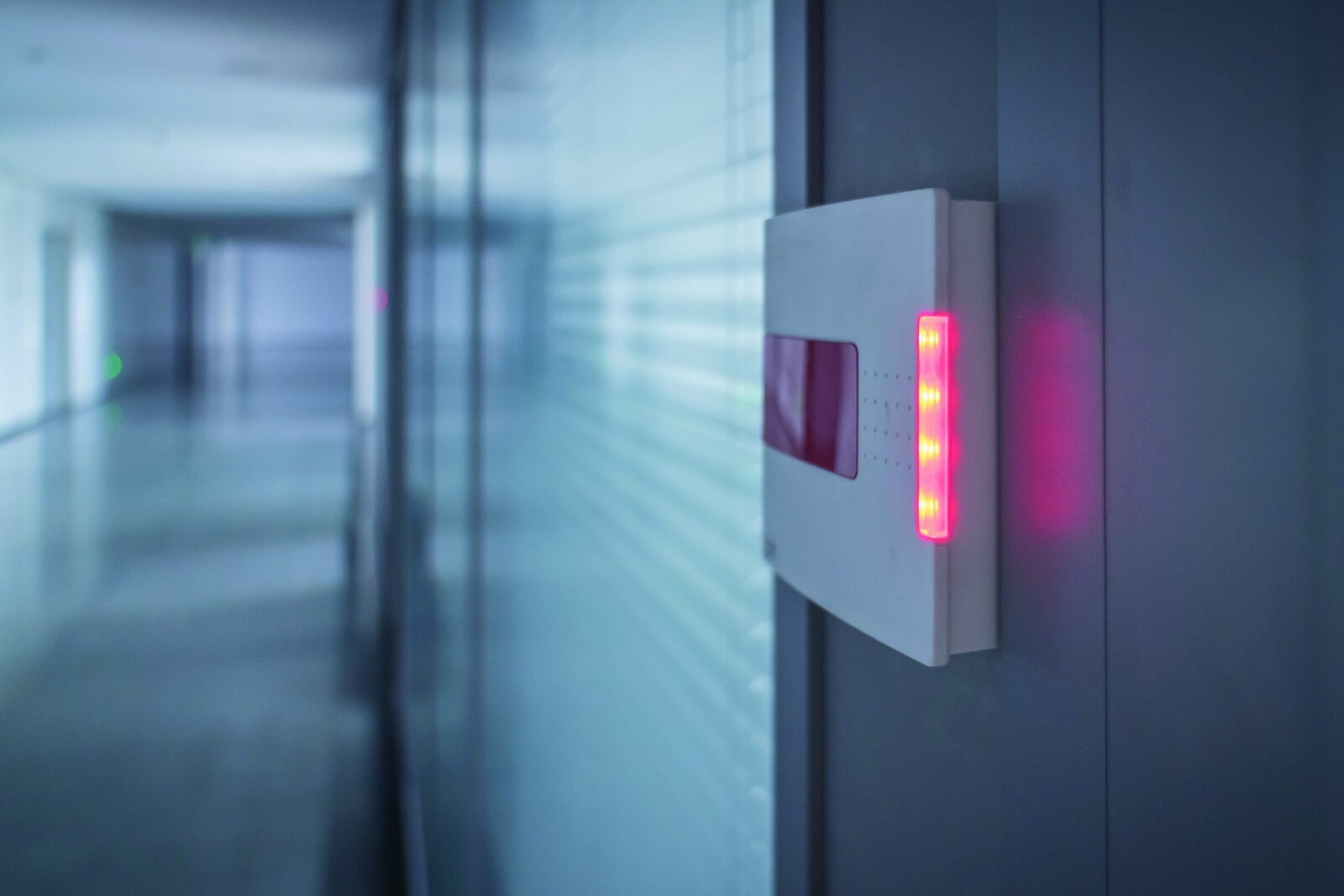
Spring Hill is one of Brisbane’s oldest residential areas, and a large share of its business premises are conversions: a timber or brick house that became three offices, a terrace turned into consulting suites, a small walk-up with one street door and a stair shared by four tenancies. Commercial security systems Spring Hill businesses are quoted often assume something else entirely — a ceiling void, a stud wall, a comms room, a loading dock. None of those may exist here.
That changes the design rather than the ambition. It means establishing the real cable paths before the device list is written, settling who owns the shared front door before anyone orders hardware, and planning an install around narrow streets, limited parking and residential neighbours. Access Alarms works from an office at 2/789 Kingsford Smith Drive, Eagle Farm, a short run up from the river.
Why Commercial Security Needs a Different Approach in Spring Hill
Cabling cannot simply be chased through original fabric
A converted cottage or small brick building may have no usable wall cavity, a ceiling sheeted hard to the joists, and a subfloor as the only honest path from one end to the other. Heritage protections may also limit what can be fixed, penetrated or altered, and that differs property to property. Those approvals belong to the owner and the relevant authority, before a technician arrives. Our part is the engineering underneath: fewer penetrations, detector positions that use existing corners, and a panel sited where the cable paths converge.
Several small tenancies behind one street door and stair
A single street door opening onto a stair with four suites off it is common here, and it usually sits outside every leased area. So nobody maintains it. The latch stops holding, the closer lets the door drift, and keys have been cut more times than anyone recorded. Settle on paper who owns the street door and stair — generally the landlord or building manager — and what each tenant is responsible for behind their own door. That single answer decides who approves the work and who pays for it.
Narrow, steep streets and limited parking change the install
Spring Hill's streets are narrow and steep in places and on-street parking is limited. That is not cosmetic. A technician who cannot stop near the door carries ladders, drills, cable drums and a panel up a slope, and that time is real. Equipment deliveries need somewhere to pull up, and work at height on a frontage opening onto a narrow footpath has to account for the footpath. Deciding the logistics beforehand is often the difference between one visit and three.
Premises that sit in a quiet residential street after hours
By early evening many working addresses here are empty while the homes around them are not. More people are nearby than in an industrial pocket, but none of them is watching your door at nine at night. So detection and a response path matter more than deterrent appearance, and anything that can sound or false-alarm has to be specified with residents fifteen metres away in mind. Noisy installation work needs an agreed window rather than an assumption about closed hours.
Since 2006
Why Spring Hill Businesses Choose Access Alarms
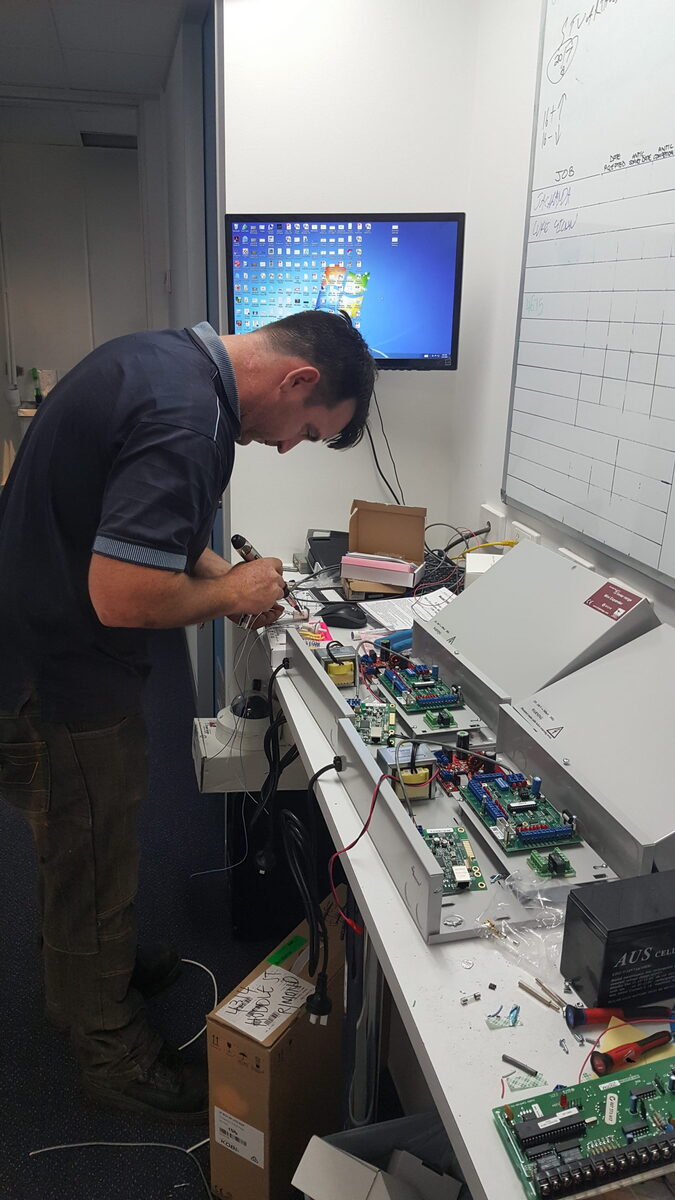
Access Alarms has designed, installed and serviced commercial security around Brisbane since December 2006, from an office at Eagle Farm that is a short drive from Spring Hill. We install and maintain alarms, CCTV, access control and intercoms, and we prefer to quote after walking the building — including the subfloor and roof space where we can get into them — because on a converted premises the cable path determines the device list, not the other way round. Alarms can be connected to our own 24/7 monitoring centre, so an activation at an empty address produces a documented response rather than noise in a residential street. Where a client runs premises in more than one city, we coordinate through a national contractor network so a multi-site rollout is handled by one point of contact.
- Do you know, in writing, whether the street door and stair are the landlord's responsibility or yours?
- If a technician told you today that a cable cannot be run without cutting into original fabric, who in your building is authorised to decide?
- Which single opening in your premises is the weakest — and is there anything detecting it?
- If your alarm activated at 9pm on a Sunday, what is the agreed sequence, and who gets called first?
What an installer owns is the design, the devices, the logging and the response path. Building approvals, heritage consents and the question of who pays for shared-area work sit with the owner, the building manager and your own lease.
Common Security Problems We Solve in Spring Hill Premises
Four tenancies share a street door and none of them treats it as theirs
Why it happens
When a house becomes three or four tenancies, the street door and stair fall outside every leased area. Responsibility is assumed rather than assigned, so repairs, re-keying and key records belong to no one in particular.
Why it matters
Unowned doors degrade. The latch stops engaging, keys accumulate with former tenants and tradespeople, and the only barrier between the footpath and four businesses is the one nobody is inspecting. When something does happen, the dispute about who should have fixed it runs longer than the repair would have taken.
What we do
We get authorisation settled before designing anything, usually with the landlord or building manager for the shared entry. Then we build two layers that do not depend on each other: a controlled street entry under the owner's control, and a self-contained system behind each suite door that the tenant owns and can take with them.
An original timber door or sash window is carrying the whole premises
Why it happens
Conversions keep the original openings. A century-old timber door with a mortice lock, or a double-hung sash with its first catch still fitted, often is the actual perimeter — and replacing it is neither cheap nor always permitted.
Why it matters
These openings are forced quietly and fast, and the damage is expensive to put right on a building where matching the fabric is difficult. Insurers also ask what was protecting the point of entry, and "the original lock" is a poor answer. Upgrading the hardware is frequently constrained by exactly the protections that make the building worth occupying.
What we do
We name the weak openings explicitly in the written assessment rather than leaving them implied, then cover them with detection instead of relying on the hardware to hold: reed contacts on the opening, movement detection on the approach inside, and where it is useful a camera with a genuinely usable view of that door.
The system was quoted as if the building were a modern office
Why it happens
Standard device counts and standard cable allowances are quick to produce and easy to compare. They assume ceiling voids, stud walls and a comms room, which is a reasonable assumption almost anywhere except a converted house.
Why it matters
The quote collapses on site. Either the work proceeds badly, with surface runs across original walls nobody agreed to, or it stops halfway and the variations arrive. Both outcomes leave you negotiating mid-install, with the building part-secured and the installer holding the information. The cheapest number at tender becomes the most expensive job.
What we do
We walk the subfloor and roof space where access allows, establish the real paths first, and only then write the device schedule. If a compromise is needed — a short surface run in an inconspicuous spot, a wireless device where a wired one would mean cutting — it is in the proposal before you sign, not raised on the day.
There is no window for noisy work next to people's bedrooms
Why it happens
Small premises want installation during closed hours to avoid disrupting clients. In a street of houses and units, those are precisely the hours the neighbours are home, and core drilling into masonry is not quiet work.
Why it matters
A job halted mid-way by a complaint leaves a building part-secured and a return visit to schedule. The relationship with the people next door is harder to repair than the wall, and in a suburb where businesses and residents share a boundary line that relationship has a long tail — including the next time you need consent for something.
What we do
We split the work. Drilling, fixing and anything percussive goes into daytime blocks you nominate; programming, commissioning and testing run quietly after hours or on a weekend morning. We agree the hours with you in advance and give the neighbours a date rather than a surprise.
What We Design, Install and Support in Spring Hill
Commercial alarm systems
Zoned detection for a converted building, so a back room can stay armed while the front suite is working.
Commercial alarm systemsCommercial CCTV
Cameras placed for the approaches people actually use, including side paths and rear yards on sloping blocks.
Commercial CCTVAccess control
Credentials on the suite door and the rooms that matter, with every opening logged against a person.
Commercial access controlAlarm monitoring
Connection to our 24/7 centre, with the response sequence written and tested at handover rather than improvised.
Alarm monitoringServicing
Scheduled checks on batteries, wireless devices, comms paths and detector coverage as a tenancy changes use.
Security system servicingStart with the building, not a product list
If your premises is a converted house or a small walk-up, the useful first step is an hour on site working out where cable can go and who owns which door. Everything else follows from that.
We will put the constraints and the compromises in writing before you commit to anything.
Commercial security specialist since 2006
We design, install, monitor and service commercial security across Brisbane, and we take over systems other companies installed.
Spring Hill Commercial Security: Frequently Asked Questions
Can security be installed in a heritage building?
Who approves work on a shared street door in a converted house?
Wired or wireless in a building with original fabric?
How do you work around neighbouring residents?
Can alarm, CCTV and access control sit on one plan?
Spring Hill Service Area
Access Alarms for Spring Hill
- Business
- Access Alarms QLD Pty Ltd
- Phone
- 1300 049 969
- info@accessalarms.com.au
- Office
- 2/789 Kingsford Smith Drive, Eagle Farm QLD 4009
- Hours
- Mon - Fri: 8:30am - 5:00pm
Explore More Commercial Security Options
Service areas
Request a Security Quote in Spring Hill
Tell us about your property in Spring Hill and we'll recommend the right system. Free quote, no obligation.