Commercial Alarm Systems Brisbane
Specified, installed and serviced from an Eagle Farm office since 2006, and connected to a separate 24/7 monitoring centre
since
Monitoring
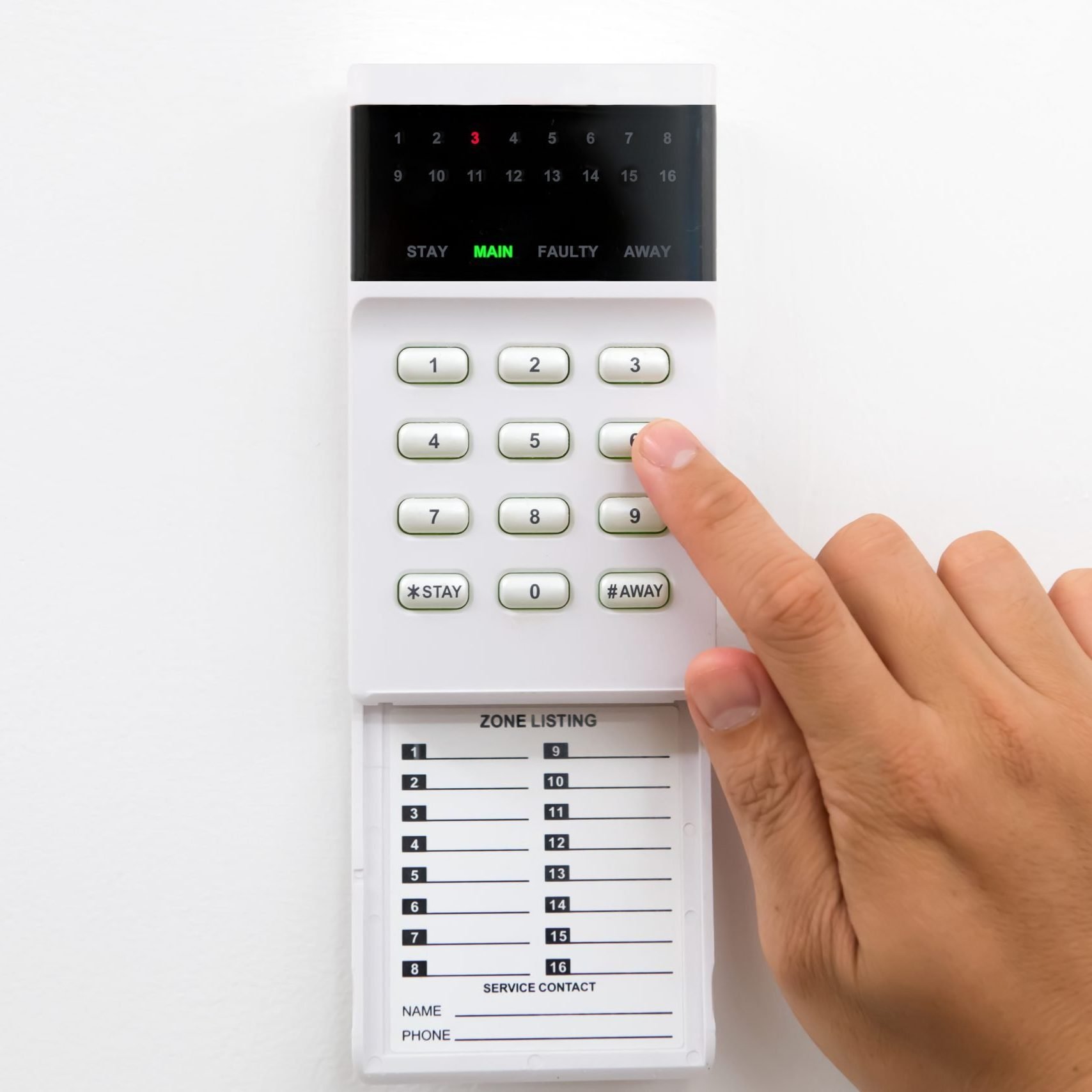
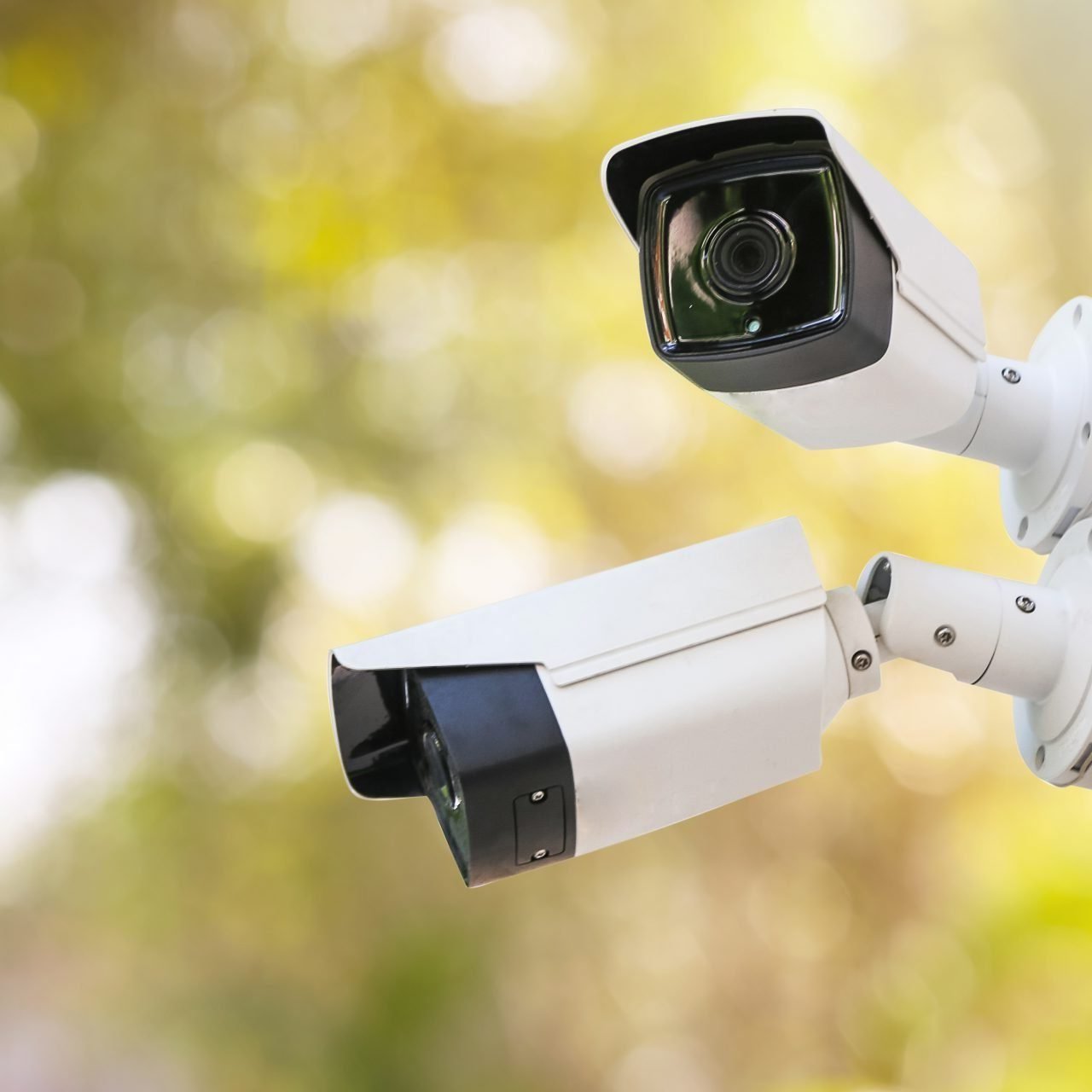
A commercial alarm trigger does not start with a police car. It starts with a signal to the monitoring centre, an operator opening your account, and a verification call asking for your response code. If nobody answers, the centre works through your emergency contacts in order, each using a voice code, and only then contacts police, a guard response service, or both, depending on what your account specifies. Access Alarms designs, installs and services the system for Brisbane businesses and connects it to that centre, from an Eagle Farm office since 2006. If you already have a panel, we can usually take it over rather than replace it. Book a technician to walk the site and check what your panel is actually reporting to.
A Brisbane business buying a commercial alarm is often not starting from an empty building. There is already a panel on the wall, left by a previous tenant, fitted by a builder, or installed by a company that has stopped answering the phone. The question is rarely what to buy. It is whether the system still works, who is watching it, and whether anyone will service it. A commercial specification differs from a scaled-up house alarm in two ways that show up daily. Multi-zone panels cover separate areas independently, so the rear stores can stay armed while a late shift works the front. Individual staff keypad codes mean the panel record shows which code disarmed the system at 5.40am, not simply that someone did. Add door and window contacts on entry points, glass break sensors for shopfront glazing, PIR and microwave motion detection, and duress buttons for staff working alone, and the system is built around how the site is actually used rather than around a package.
Why Commercial Alarm Systems Matter in Brisbane
Brisbane City Council puts storm season between October and the end of March, and warns that severe storms in that window bring large hail, damaging winds and heavy rainfall. That is six months a year when mains power at a commercial site is not something you can assume, and it matters to an alarm more than most owners expect, because two separate things fail at once.
Since 2006
Why Brisbane Businesses Choose Access Alarms
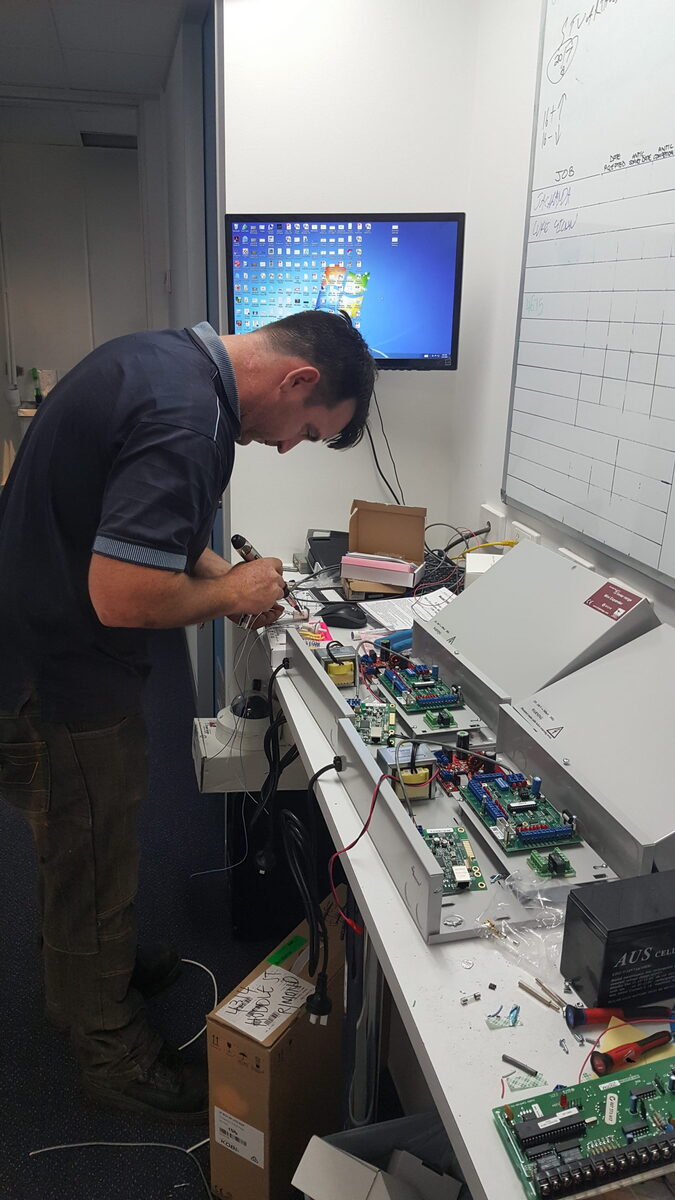
Access Alarms has operated as a locally owned Brisbane security installer since December 2006, working from a real office at 2/789 Kingsford Smith Drive, Eagle Farm. We service, upgrade and take over alarm systems originally installed by other companies, and the SafeDial communicator we fit connects to most existing panels. The panel brands named on our own alarm pages are Bosch, Hills, Paradox and Tecom/Challenger; that is an installer relationship, not accredited or authorised dealer status with any of them. On licensing, we would rather you checked than took our word for it. Installing, repairing, servicing and maintaining alarms, monitoring systems and detectors in Queensland is licensed work under the Security Providers Act 1993, and applicants are fingerprinted by police and criminal-history checked. Our technicians are licensed and insured, and you are welcome to ask us for the details. Better still, search the Office of Fair Trading's free public register, which shows a licence's status, class, expiry date and any conditions, for us and for anyone else quoting you.
Brisbane's storm season runs from October to the end of March, and the two things it exposes, a tired backup battery and a mains-dependent signal path, are both checkable before it starts. Book a technician to review the panel, confirm what path it reports on, and check that the emergency contacts and response codes on your monitoring account still match the people who actually work there. If your system was installed by someone else, that is not an obstacle. Taking over other companies' systems is ordinary work for us.
Visit Our Eagle Farm Office
Access Alarms
- Business
- Access Alarms QLD Pty Ltd
- Phone
- 1300 049 969
- info@accessalarms.com.au
- Office
- 2/789 Kingsford Smith Drive, Eagle Farm QLD 4009
- Hours
- Mon - Fri: 8:30am - 5:00pm
Common Security Problems We Solve
The alarm still arms and beeps, but nothing is reaching the monitoring centre
Why it happens
Bosch's own Australian support documentation confirms that the closure of Australia's 3G mobile network affected named alarm communicator modules in Bosch Solution panels, including the CM744B on Solution 6000 and the B450-M and B443 units on Solution 2000 and 3000, and that specific 4G replacement units and firmware are required.
Why it matters
The panel keeps behaving normally, so the manager believes the site is monitored when the signal has nowhere to go. Nobody discovers it until a real trigger, which is the worst possible time to find out.
What we do
We check the communicator and its path when we service a system. Bosch supplies the required firmware to installers only, so this is not something a manager can verify from the keypad.
The alarm triggers and nobody who can be reached holds the response code
Why it happens
The monitoring centre works from the account, which holds the property address, contact details, the emergency contacts in order and the response code, with each nominated contact holding a voice code on file. Contact lists go stale as staff change.
Why it matters
Verification is what filters false alarms before anyone is sent, and escalation to police or a guard response service is conditional on what the account specifies rather than automatic. If nobody can be verified, the chain stalls at exactly the wrong moment.
What we do
When we install or take over a system, the escalation account is set up with you, and we recommend reviewing the contact order, response code and voice codes whenever staff change.
The panel faults or trips the siren after a storm-season power interruption
Why it happens
Panels run on mains power with a backup battery, and as that battery discharges or when power is restored the panel can beep, show a fault light or trip the siren. Council puts Brisbane's storm season between October and the end of March, with large hail, damaging winds and heavy rainfall.
Why it matters
On a commercial site with an after-hours guard arrangement, a weather-triggered activation means a call-out someone pays for and a staff member driving in at night. Across a six-month season that repeats.
What we do
Book a service before October so batteries, fault indications and zone behaviour are checked ahead of the season, rather than diagnosing a siren at 2am in the middle of it.
The signal path dies with the mains
Why it happens
Fixed phone lines, and even NBN connections, generally rely on a connection to power and stop working when power is lost.
Why it matters
The outage that takes out the phone line is the same outage that puts the panel on battery, so the site can lose its reporting path in the same conditions that can make the panel beep, show a fault light or trip the siren.
What we do
A SafeDial wireless communicator carries the signal over a SIM-based mobile path and is powered by the alarm system itself, which removes the mains dependency. It connects to most alarm systems, and we confirm compatibility with your panel before quoting.
Everyone shares one code and the whole site arms as a single block
Why it happens
Systems scaled up from a domestic specification often run a single shared PIN across a single zone, which works until the site has cleaners, contractors, deliveries and shift staff.
Why it matters
Nobody can tell which person disarmed the panel, and the site cannot be part-secured, so one late worker leaves the entire premises unarmed for the evening.
What we do
We specify multi-zone panels that cover separate areas independently and individual staff keypad codes, so areas can be armed on their own and the panel record shows which code was used.
The company that installed the alarm has stopped answering
Why it happens
Commercial occupiers inherit panels from previous tenants, from builders, or from installers who have moved on, and the system has no one attached to it.
Why it matters
Without someone servicing it the system decays quietly. Batteries age, fault indications go unresolved, and nobody confirms whether the alarm still reports anywhere.
What we do
We service, upgrade and take over alarm systems originally installed by other companies, and the SafeDial unit connects to most alarm systems, so a takeover is often possible without replacing the panel.
What We Design, Install and Support
Multi-zone commercial alarm panels
Zoning is what lets a Brisbane site keep operating while parts of it stay secured: arm the rear stores and back office overnight while a late shift works the front, instead of choosing between all-on and all-off.
Detection design: PIR, microwave, contacts and glass break
Detector choice follows the room, not a package. AS/NZS 2201.1 states plainly that it does not specify the degree of protection a particular installation needs, which is exactly why a commercial job is walked and designed rather than counted in sensors.
Duress buttons and individual staff codes
Duress buttons matter where staff work alone or in isolated areas, and individual keypad codes give a manager a record of which code armed or disarmed the panel instead of one shared PIN that everyone on site knows.
Back-to-base monitoring connection
Connecting the panel to a 24/7 monitoring centre starts a verification chain: operator, a call for your response code, then your emergency contacts in order, then police or a guard response service depending on what your account specifies. That is why the contact list is worth reviewing whenever staff change.
About alarm monitoringCommunicator and signal path upgrades
A SafeDial wireless communicator moves the signal onto a SIM-based mobile path powered by the alarm system, removing the mains dependency that stops a phone line or NBN service during a Brisbane outage. It connects to most alarm systems, and we confirm compatibility with your panel first.
Alarm takeover, servicing and upgrades
We service, upgrade and take over alarm systems originally installed by other companies. A visit before October is the practical way to check batteries and the signal path ahead of Council's October to March storm season.
Security system servicingCommercial security specialist since 2006
We design, install, monitor and service commercial security across Brisbane, and we take over systems other companies installed.
Need a security assessment for your commercial property? We'll recommend the right system.
Frequently Asked Questions
What actually happens when my commercial alarm goes off?
Why does my alarm keep false-triggering during Brisbane storms?
Do commercial alarms need monitoring?
Can staff have individual alarm codes?
What brands of commercial alarm do you install?
My alarm still arms and beeps. Could it have stopped reporting without me knowing?
How do I check that a Brisbane alarm installer is licensed?
How do I know the monitoring centre my alarm reports to is any good?
Explore More Commercial Security
All commercial securityService areas
Sources
- Brisbane City Council - Storm safety and preparing for an emergency
- Queensland Government - Check a security licence (Office of Fair Trading public register)
- SPAAL - Alarm Monitoring Centre Grading Scheme (AS 2201.2:2022)
- Bosch Security Systems Australia - Closure of the 3G mobile network in AU: how does it affect alarm users?
Protect Your Business
Get a security assessment for your commercial property. Free quote, no obligation.