Childcare Security Systems Brisbane
Controlled entry at drop-off and pick-up, and a record of who came through the door
since
Monitoring
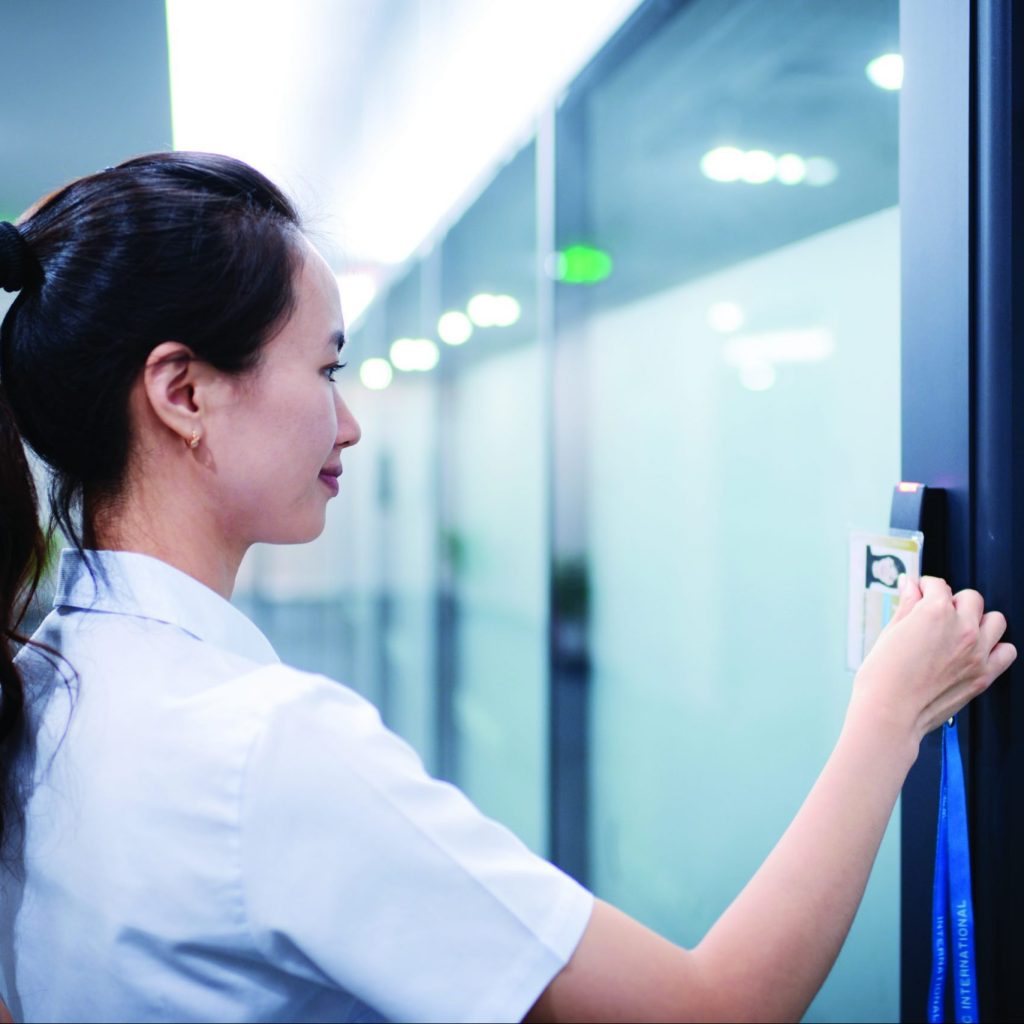

Regulation 99 asks one question every afternoon: may this child leave with this adult? The answers it allows are narrow – principally a parent, or an authorised nominee named in the child’s enrolment record, or someone acting on that person’s written authorisation – and the duty sits with the approved provider and the nominated supervisor. No supplier carries that for you. What an entry system carries is the mechanics: a video intercom at the gate and the main entrance so a person is identified before anything opens, with the release controlled from the front office, temporary credentials for contractors and relief staff, and an audit trail of every access event. Access Alarms has traded since 2006 from an office at Eagle Farm. Book a technician.
Two things happen at a childcare gate that do not happen at any other commercial door. Families arrive inside a short morning band and have a regulated right to come in – regulation 157 requires that a parent may enter the premises at any time their child is being educated and cared for, subject to limited exceptions. And at the end of the day a child leaves with someone, which regulation 99 restricts principally to a parent or an authorised nominee named in the enrolment record, or a person acting on their written authorisation. A gate on the latch handles the first and fails the second. A gate nobody can get through fails both. Early learning centres and childcare facilities are named service markets for Access Alarms, and schools and childcare is one of six sectors the business lists separately.
Why Childcare Security Systems Matter in Brisbane
A Brisbane centre's security question is not the one an office asks. An office controls who comes in; a centre must also control who a child goes out with, and show what happened.
Since 2006
Why Brisbane Businesses Choose Access Alarms
Access Alarms opened in December 2006 and works from an office at 2/789 Kingsford Smith Drive, Eagle Farm, with 24/7 alarm monitoring available through a monitoring centre. Early learning centres and childcare facilities are named service markets, and schools and childcare is one of six sectors the business lists separately rather than folding into general commercial work. The business's own website records that it has installed security for an early learning operator across multiple campuses. Be precise about what that proves and what it does not: it evidences a commercial relationship with a multi-site early learning operator, published by the business itself. It does not say which campuses, whether any is in Brisbane, what was installed, when, or with what result, and nothing published says any system was designed around the National Regulations. Separately, Access Alarms describes itself as licensed and insured but publishes no licence number - ask for the number and the licence class, and check it on the register yourself.
Bring your delivery and collection procedure to the site visit. Regulation 168 requires the service to have policies and procedures for the delivery of children to, and collection of children from, the premises, including procedures complying with regulation 99, and regulation 170 requires the approved provider to take reasonable steps to ensure they are followed. That document should decide the hardware, not the other way round: where the intercom goes, who holds the release, and what the access record needs to show. Access Alarms can walk the entry gates and main entrances with you, look at staff, contractor and relief credentials, and set up the access log, from an Eagle Farm office and a business trading since 2006. Book a technician, or call and talk it through first.
Visit Our Eagle Farm Office
Access Alarms
- Business
- Access Alarms QLD Pty Ltd
- Phone
- 1300 049 969
- info@accessalarms.com.au
- Office
- 2/789 Kingsford Smith Drive, Eagle Farm QLD 4009
- Hours
- Mon - Fri: 8:30am - 5:00pm
Common Security Problems We Solve
The gate ends up on the latch through the morning drop-off window
Why it happens
Families arrive inside a short band at the start of the day, and a room leader cannot keep leaving the floor to walk to the gate, so the latch goes on because it is the only thing that makes the morning work.
Why it matters
Regulation 157 gives a parent the right to enter the premises at any time their child is being educated and cared for, subject to limited exceptions, so a centre genuinely does need people to get in quickly. But section 170 of the National Law in Queensland requires the approved provider and nominated supervisor to ensure an unauthorised person does not remain on the premises while children are being educated and cared for, unless directly supervised by an educator or other staff member. An open gate serves the first duty by defeating the second.
What we do
Video intercoms at all entry gates and main building entrances, with electronic door releases controlled from the front office, mean a staff member can see who is at the gate and press the release without leaving the desk. The gate stays shut and the morning still moves.
An adult arrives at pick-up who is not named on the enrolment record
Why it happens
Rosters change, a grandparent steps in, a parent texts ahead. ACECQA describes an authorised nominee as a person given written authority by a child's parents or guardians to collect that child, and an arrangement made verbally in a car park is not that.
Why it matters
Regulation 99 allows a child to leave only in defined circumstances - principally into the care of a parent or an authorised nominee named in the enrolment record, or under that person's written authorisation - and the duty sits with the approved provider and the nominated supervisor. The regulation also excludes a parent prohibited by a court order from having contact with the child. Someone standing at a door has to say no, quickly, to a person who is often upset.
What we do
A video intercom means the person is identified before anything opens, and the release decision stays with a staff member who can check the record first. Duress buttons that trigger an immediate alert are among the things the business installs; at a front desk that means raising help without leaving the door or making a call. The decision, and the duty, remain the service's.
Six weeks later, a parent asks who came to the door at 3:40pm
Why it happens
A regulated service is repeatedly asked to show what happened rather than assert it - to a family, to its own approved provider, or to an authorised officer - and memory is not a record.
Why it matters
'Can we show who came through the door and when?' is a question a director has to answer after the fact, and with nothing recorded the honest answer is no.
What we do
Access control produces audit trails of all access events - which credential opened which door, at what time. Remote access lets a centre director review recorded footage from anywhere, which matters because a director is usually off the floor, at another site, or answering the question hours after it happened.
A plumber, a pest technician and an agency relief educator are all on site while children are there
Why it happens
A centre has a rotating cast of adults who are not its educators, and they arrive on the day they arrive.
Why it matters
Under section 170, an unauthorised person must not remain on the premises while children are being educated and cared for unless under the direct supervision of an educator or other staff member, and that duty is the approved provider's and the nominated supervisor's. In Queensland, a tradesperson working in an education and care service needs a blue card when working there while children are present; a frequency exemption exists for no more than 7 days in a calendar year, and it does not apply to a restricted person or to a business owner or operator. The Queensland Government's own worked example is an electrician replacing power points inside a day care centre.
What we do
Temporary visitor credentials for contractors and relief staff bound when and where a visiting adult can get in, while staff hold their own cards or fobs, and every event lands in the access log. A credential is not a clearance and screens nobody: satisfy yourself about blue card status directly with each contractor you book, and ask whether the work can be scheduled outside operating hours. The supervision duty stays with the service.
The hardware gets chosen before the delivery and collection procedure is written
Why it happens
Equipment is easier to specify than a procedure, and a quote usually arrives before the policy does.
Why it matters
Regulation 168 requires an education and care service to have policies and procedures for the delivery of children to, and collection of children from, the premises - including procedures complying with regulation 99 - and for the acceptance and refusal of authorisations; regulation 170 requires the approved provider to take reasonable steps to ensure they are followed. ACECQA notes that where authorised officers are concerned about non-compliance, they consider the service's delivery and collection policies and its acceptance and refusal of authorisations policy. The procedure is what gets examined.
What we do
Bring the procedure to the site visit. It decides where the intercom goes, who holds the release, whether entry is single or staged, and what the log needs to show. The system is built to fit the procedure; it does not write one, and installing equipment is not evidence that a procedure is being followed.
Everyone starts assuming the cameras are watching the children
Why it happens
Camera copy in this sector invites the assumption, and a screen in an office looks like oversight.
Why it matters
Under the National Quality Standard, element 2.2.1 requires that at all times, reasonable precautions and adequate supervision ensure children are protected from harm and hazard. Supervision means an educator with eyes on children. A camera is not supervision, does not contribute to a ratio, and no installer should suggest otherwise.
What we do
Every capability the business installs sits at the boundary rather than in the rooms: intercoms at entry gates and main entrances, staff and visitor credentials, the access log, outdoor camera coverage, and a director reviewing recorded footage remotely. Educators supervise children. The system's job is who came through the door, when, and what record exists of it.
Camera placement gets settled on installation day
Why it happens
It is treated as a mounting question - where the cable can run - rather than as a decision about what the service is willing to record and keep.
Why it matters
The OAIC states that where the Privacy Act 1988 covers an organisation, personal information collected through a surveillance device must comply with the Australian Privacy Principles, including telling people their image may be captured before they are recorded, keeping recorded personal information secure, and destroying or de-identifying it when it is no longer needed. The OAIC's own health privacy guidance names private schools and childcare centres among the organisations it is written for, so a centre should not assume the small-business turnover threshold puts it outside the Privacy Act. Whether it does turns on your own circumstances, and Access Alarms does not give privacy or legal advice.
What we do
Settle placement, retention and who may view footage before equipment is ordered, not after. Where cameras may or may not go inside a care environment - including change areas, toilets and sleep rooms - is a decision for your service, taken with the Queensland Department of Education as your regulatory authority and your own advice. For outdoor areas the business states that it positions cameras to see what is happening in outdoor areas without capturing footage of bathrooms or other private spaces.
What We Design, Install and Support
Video Intercom Entry at Gates and Main Doors
Video intercom at entry gates and main building entrances, with an electronic door release.
The business installs video intercoms at all entry gates and main building entrances, with electronic door releases controlled from the front office. In a centre that matters at two specific moments - drop-off and pick-up - and because a parent has a regulated right to enter while their child is in care, the design problem is letting the right people in quickly rather than keeping everyone out.
Commercial intercomsStaff, Contractor and Relief Credentials
Access control for staff using cards or fobs, plus temporary credentials for visitors.
Staff hold cards or fobs, and contractors and relief staff can be issued temporary visitor credentials. That is the mechanism for the adults who are not educators but are on site while children are there: a credential bounds when and where a person can get in and produces a record of it, while the duty to ensure an unauthorised person does not remain unsupervised stays with the approved provider and nominated supervisor.
Access controlAccess Audit Trails
A record of access events across the doors on the system.
Access control produces audit trails of all access events: which credential opened which door, at what time. Keep it clearly separate from your attendance record - regulation 158 requires the approved provider to keep a record of each child's full name and the date and time of arrival and departure, signed at the time by the person delivering or collecting the child. The two records answer different questions, and one does not produce or replace the other.
Access controlOutdoor Cameras and Remote Review
Camera coverage of outdoor areas, with remote access for reviewing recorded footage.
Remote access lets a centre director review footage from anywhere, which suits a role that is rarely at a desk when the question gets asked. On placement, the business states that it positions cameras to see what is happening in outdoor areas without capturing footage of bathrooms or other private spaces. Placement inside a care environment is a decision for your service, taken with your regulatory authority and settled before equipment is ordered.
Commercial CCTVDuress Alert at the Entry Point
Duress buttons that trigger an immediate alert.
The business installs duress buttons that trigger an immediate alert. In a centre the useful place for one is the entry point, where an educator or administrator can end up holding a line with an adult who will not accept that a child cannot be released to them - a button at the desk raises help without that staff member leaving the door.
Commercial alarms24/7 Alarm Monitoring
Alarm monitoring available 24/7 through a monitoring centre.
A centre is empty overnight and across the weekend, which is the one part of this picture that needs no regulatory framing at all. Alarm monitoring is available 24/7 through a monitoring centre. Ask any installer what happens when an alarm activates out of hours, and get the escalation steps in writing before you sign.
Alarm monitoringCommercial security specialist since 2006
We design, install, monitor and service commercial security across Brisbane, and we take over systems other companies installed.
Need a security assessment for your commercial property? We'll recommend the right system.
Frequently Asked Questions
Can parents use an intercom at the gate?
Who may a child be released to at pick-up?
Can an access control log take the place of our attendance record?
Will installing a security system make our centre compliant with the National Regulations?
What does Queensland require of a tradesperson working at our centre while children are there?
Where can cameras go in a childcare centre?
We do not want the centre to feel like a fortress. Can entry still be controlled?
Explore More Commercial Security
All commercial securityService areas

Protect Your Business
Get a security assessment for your commercial property. Free quote, no obligation.