Office Security Systems Brisbane
Zoned protection for leased tenancies, designed around your layout and your staff hours
since
Monitoring


Your building credential opens the lobby and calls the lift. It does not decide who walks into your server room, your finance area or your document store. Those rooms sit inside your tenancy, and they can have their own access credentials, their own alarm zones, and a logged record of every access event. Offices are one of six sectors the business names and treats separately. Trading since 2006 from an Eagle Farm office, with 24/7 alarm monitoring available through a monitoring centre. Book a technician before your fit-out is signed off.
Office security is a different purchase from warehouse or retail security, and the reason is the lease. You are securing rooms inside a suite you do not own, in a building whose front door runs on somebody else’s system, under an agreement that – on the Queensland Small Business Commissioner’s general description of make-good clauses – may require tenant-installed fixtures and installations to be removed at the end of the term. That changes what you install, where you put it, and what you ask before anyone drills a hole. Access Alarms designs office systems around the tenant’s own layout and working hours, in a single-tenancy office or a shared commercial building.
Why Office Security Systems Matter in Brisbane
Most Brisbane office managers inherit their security position rather than choose it. The building hands you a lobby credential and a lift card. The tenancy hands you whatever the last occupant screwed to the wall. Neither was designed around what your business keeps behind its own door.
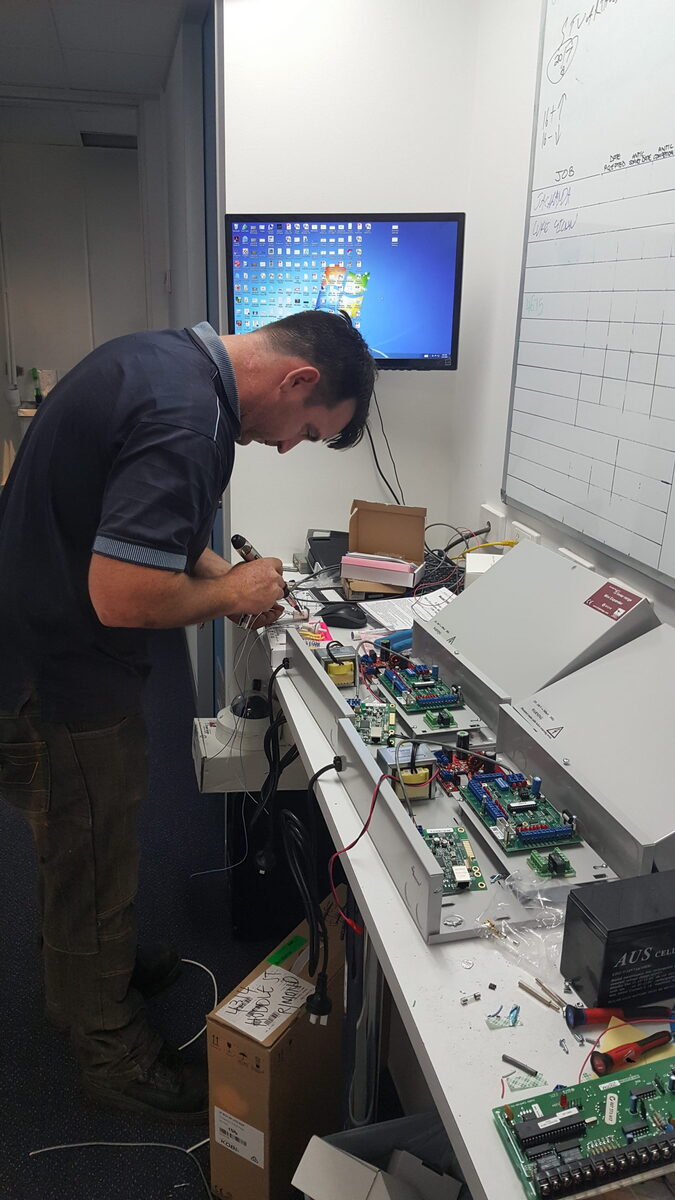
Since 2006
Why Brisbane Businesses Choose Access Alarms
Access Alarms has traded since 2006 and works from a real office at 2/789 Kingsford Smith Drive, Eagle Farm. Offices are one of the six sectors the business names and treats separately, and it maintains a dedicated office security service. It takes over systems originally installed by other companies rather than requiring a full replacement. Alarm monitoring is available 24/7 through a monitoring centre. Two things are worth stating plainly. The business describes itself as licensed and insured, but publishes no licence number; ask for it directly. And its 'Trusted by 100+ Businesses' line is the business's own statement with no breakdown by sector - nothing published says how many of those are offices. If you want a neutral yardstick to hold any quote to, AS/NZS 2201.1:2007 sets minimum requirements for the design, installation, commissioning and maintenance of intruder alarm systems, and applies to commercial premises as well as private ones.
The cheapest moment to zone an office is before the fit-out is signed off, while the ceiling is still open and the make-good conversation with your landlord is still live. Access Alarms can look at which rooms need their own credentials and alarm zones, set access rules that work around your cleaners and your weekend staff, and tell you whether the system you inherited can be serviced and upgraded rather than replaced. Book a technician, or call the Eagle Farm office.
Visit Our Eagle Farm Office
Access Alarms
- Business
- Access Alarms QLD Pty Ltd
- Phone
- 1300 049 969
- info@accessalarms.com.au
- Office
- 2/789 Kingsford Smith Drive, Eagle Farm QLD 4009
- Hours
- Mon - Fri: 8:30am - 5:00pm
Common Security Problems We Solve
The building's swipe card is treated as though it were the office's security system
Why it happens
It is a fair question to ask whether your own security is necessary when the building already has swipe access, and the credential in your wallet feels like an answer because it is the only one anyone handed you.
Why it matters
Building access and in-tenancy security answer different questions, and the second one sits inside your suite, not at the lobby.
What we do
Access Alarms designs to the tenant's own layout and working hours, in a single-tenancy office or a shared commercial building, and zones the rooms that need separate control rather than duplicating what the building already does.
The alarm never gets armed because the cleaners set it off
Why it happens
Offices run mixed hours. Cleaners come after six, a few staff want weekend access, and everybody else is in during business hours - so a single arm-everything panel is wrong for most of the week.
Why it matters
An alarm that staff have learned not to arm is not protecting anything, and the rooms that most needed covering overnight are the ones left open.
What we do
Access control can be set with time-based rules for each person, allowing some staff 24/7 access while restricting others to business hours, and a multi-zone panel can arm common areas while leaving a cleaning zone accessible, or hold a 24-hour-armed room separate from the main building.
The server room opens on the same credential as the kitchen
Why it happens
A fit-out is usually built with one flat layer of access across the whole tenancy, because that is the simplest thing to specify when the walls are going up.
Why it matters
'Do you secure server rooms separately?' is one of the two questions this business publishes an answer to on its own office page, which suggests it is asked often.
What we do
Sensitive areas can be given their own access control and alarm zones so only authorised people can enter, with every access attempt logged.
You have inherited the previous tenant's fit-out, an unlabelled panel, and no record of who holds credentials
Why it happens
Security equipment tends to stay with the tenancy when the occupant changes, and the documentation rarely comes with it.
Why it matters
You cannot say who can still open your doors, and the assumption is often that the only fix is a full replacement partway through a lease.
What we do
Access Alarms takes over other companies' systems: in most cases it can service, repair and upgrade what is already there, so you do not have to start over.
Nobody asks what happens to the equipment at the end of the lease until the end of the lease
Why it happens
Make-good sits in the lease document, not in the fit-out program, so it usually surfaces long after the cabling is in the ceiling.
Why it matters
The Queensland Small Business Commissioner describes make-good as the tenant's obligation to return the property to its original condition or as specified in the lease, and says common requirements include removing tenant-installed fixtures, partitions, joinery, installations, flooring and ceiling finishes. Business Queensland's general guidance is that a tenant will usually be required to leave the premises in the condition it was in at the start of the lease, and that a landlord may carry out the work and take the cost from the bond or bank guarantee if they do not. Whether the readers, keypads and cabling in a security system fall inside your own make-good obligation is a question for your lease and your own adviser, not one this page can answer.
What we do
This is a question for your lease, your landlord and your own adviser - Access Alarms does not interpret leases and does not offer legal advice, and the QSBC's own advice is to negotiate these issues early. What can happen at the design stage is a conversation about where equipment goes before anything is fixed in place, since the system is designed around your layout anyway.
A laptop goes missing over a weekend and nobody can say which rooms were entered
Why it happens
Without zoned access, the only record is that somebody was in the building - which is true of everyone with a lobby credential.
Why it matters
The OAIC gives a lost or stolen device holding personal information as an example of a data breach, and an organisation covered by the Privacy Act must notify where the breach is likely to result in serious harm. Whether that applies to you is conditional: the OAIC generally exempts a business turning over $3 million or less a year, with listed exceptions including health service providers, businesses trading in personal information and Commonwealth contracted service providers.
What we do
Zoned access with a full audit trail of every access event gives you a record of which rooms were entered and on whose credential. That is a record for your own investigation, not a compliance service - Access Alarms does not provide privacy or legal advice, and no security system discharges an obligation under the Privacy Act.
What We Design, Install and Support
Office Access Control
Card readers, key fobs, PIN codes and smartphone access on your entry doors and internal doors, administered by you.
Controlling who comes through the front door is the foundation of office security, and the credential types offered are card readers, key fobs, PIN codes and smartphone access. Rules are set per person and by time, so a few staff can hold 24/7 access while everyone else is limited to business hours.
Access controlOffice Alarm Systems
Intruder alarm panels and detection for commercial tenancies, with the option of 24/7 monitoring.
A multi-zone panel is what makes an office alarm usable through a normal week: you can arm common areas while leaving a cleaning zone accessible, or keep a 24-hour-armed room separate from the main building.
Commercial alarmsServer Room and Sensitive Area Zoning
Separate access credentials and alarm zones for the rooms inside your premises that need more protection than the rest.
Server rooms, finance areas, executive offices and document stores often need a higher level of protection than general work areas, so they get their own access control and alarm zones - only authorised personnel can enter, and every access attempt is logged, giving a full audit trail of every access event.
Access controlVideo Intercom and Reception Entry
Video intercom at the entry door so the person answering can see and speak to a visitor before releasing the lock.
Entry control is paired with video intercom so reception can identify a visitor before letting them in - which is the moment an office either stops an uninvited caller or does not.
Commercial intercomsServicing and Takeover of an Existing System
Servicing, repair and upgrade of security systems, including systems installed by another company.
An office tenant usually inherits a fit-out rather than specifying one. Access Alarms takes over other companies' systems and, in most cases, can service, repair and upgrade what is already installed - you do not have to start over.
Security system servicingCommercial security specialist since 2006
We design, install, monitor and service commercial security across Brisbane, and we take over systems other companies installed.
Need a security assessment for your commercial property? We'll recommend the right system.
Frequently Asked Questions
Can I install an alarm or access control in a leased office?
Do I need my own security if the building already has swipe access?
Can I restrict after-hours access to certain staff?
Do you secure server rooms separately?
We have inherited the previous tenant's security system. Do we have to replace it?
If a laptop is stolen from our office, do we have to report it?
How should I compare quotes from different office security installers?
Explore More Commercial Security
All commercial securityService areas
Protect Your Business
Get a security assessment for your commercial property. Free quote, no obligation.