Can a Business Use CCTV at Work in Queensland?
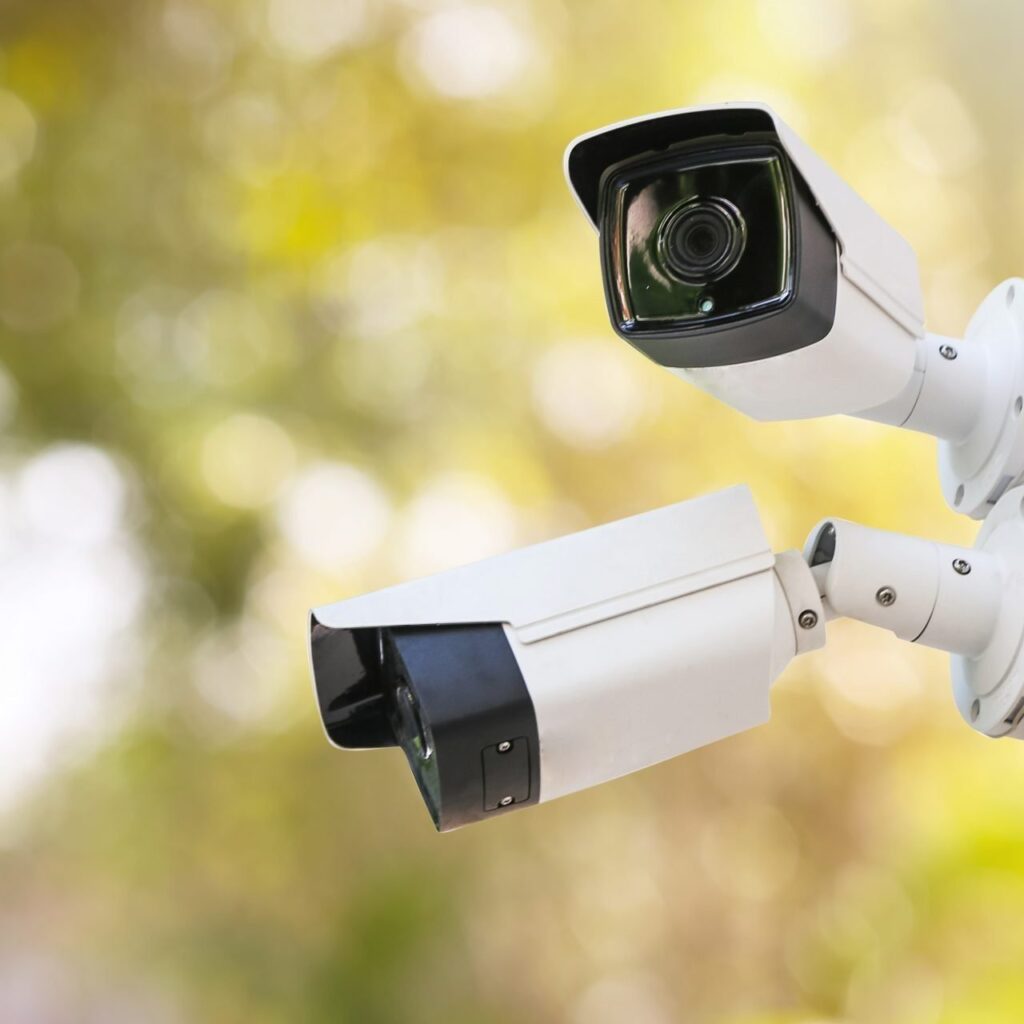
Queensland doesn’t have an Act written just for workplace cameras, so a business using CCTV at work has to stay inside general laws. Listening in on private conversations and recording in private areas carry criminal offences, and the federal Privacy Act adds duties for the businesses it covers.
This page is general information, drawn from the laws and regulators listed at the end, as we read them on 5 November 2026. It isn’t legal advice. Get advice from an employment or privacy lawyer before you point cameras at staff.
Queensland’s short answer: workplace cameras come under general laws
Workplace cameras in Queensland come under general laws because the state has no specific workplace surveillance law. The Queensland Law Reform Commission’s terms of reference for its workplace review say employers must comply with general laws, such as the Invasion of Privacy Act 1971 and section 227A of the Criminal Code. The same document says “surveillance of employees by employers is not specifically regulated in Queensland”. Those terms date from 2018, and the Commission still listed that review as on hold when we read its page.

The terms of reference list reasons employers use these devices, including protecting property, detecting possible fraud, monitoring performance and keeping staff safe. They also say that use must be balanced against an employee’s reasonable expectations of privacy.
The federal privacy regulator, the Office of the Australian Information Commissioner (OAIC), says it may be reasonable for an employer to monitor some activities to check staff are doing their work and using resources appropriately. It adds that the employer must follow relevant Australian, state and territory laws.
Which law covers what in Queensland
Different laws cover different parts of a workplace camera system. This table is a summary, so read the Act or ask your lawyer before relying on a single row.
| Topic | Law or source | What it says, in short | Who it reaches |
|---|---|---|---|
| Recording sound | Invasion of Privacy Act 1971 (Qld), ss 4, 42 and 43 | Offence to use a listening device on a private conversation, with exceptions including for a party to the conversation | A person, and an executive officer may also be taken to have committed a corporation’s offence |
| Passing on what was heard | Invasion of Privacy Act 1971 (Qld), ss 44 and 45 | Limits on communicating or publishing private conversations, with exceptions | A person, including a party who used the device |
| Video in private settings | Criminal Code (Qld), ss 207A and 227A | Offence to observe or visually record someone without consent where a reasonable adult would expect privacy, and the person is in a private place or doing a private act | A person |
| Personal information in footage | Privacy Act 1988 (Cth), as explained by the OAIC | Take reasonable steps to tell people about the collection, at or before the time or as soon as practicable after, keep recordings secure, and destroy or de-identify them when no longer needed | Organisations the Act covers (see the turnover table below) |
| Serious invasions of privacy | Privacy Act 1988 (Cth), Schedule 2 | People can sue in court, where they had a reasonable expectation of privacy and other tests are met | Goes beyond organisations covered by the Australian Privacy Principles |
| Installing and monitoring | Security Providers Act 1993 (Qld), ss 6B, 7, 8A and 9 | Licence needed for this work when it’s done for reward, with some in-house exceptions | Installers, security officers and the people who engage them |
| Licensed venues | Liquor Act 1992 (Qld), s 142AH | CCTV at patron entrances and exits, plus signs | Only licensees the division applies to |
| Staff policy | Fair Work Ombudsman best practice guide | Tell staff which areas are under surveillance and who has access | Guidance on good practice |

The 14-day notice and magistrate rules come from interstate law
If you’ve read about 14 days’ notice or a magistrate’s approval for hidden cameras, check which state the article means, because we found those rules in interstate law. The Queensland terms of reference say New South Wales, Victoria and the ACT have legislation that specifically regulates workplace surveillance.
We read the ACT’s Workplace Privacy Act 2011 directly. The NSW Act wouldn’t load for us, so the only NSW detail below comes from a NSW department’s notice to its own staff. We didn’t read the Victorian law, so this page makes no statement about what it requires.
| Rule | Where it’s written | Position in the Queensland laws read for this page |
|---|---|---|
| Written notice to workers at least 14 days before surveillance starts | ACT s 13, with a shorter period if the worker agrees. A NSW department’s staff notice also refers to a 14-day written notice requirement under the NSW Act | We didn’t find this in the Queensland Acts listed above |
| Cameras clearly visible, with a sign at each entrance | ACT s 15 | The only sign rule we found is in the licensed venue conditions |
| Court authority for covert surveillance of a worker | ACT ss 26 and 28, through the Magistrates Court, to find out if a worker is engaged in unlawful activity | We didn’t find this in the Queensland Acts listed above. Get legal advice before using hidden cameras |
| Named no-go areas, such as toilets, change rooms, prayer rooms and first-aid rooms | ACT s 41 | Criminal Code s 227A uses its own test instead of this list |
A Queensland business can choose to copy those rules as a house standard. Just don’t describe them to staff as Queensland law. If you run sites in more than one state, ask for advice on each one.

Audio comes under a separate Queensland law, so decide on it first
Sound and video sit under different Queensland laws. The Commission’s civil surveillance terms of reference say the Invasion of Privacy Act covers listening devices but “does not prohibit or regulate optical, tracking or data surveillance devices”. That makes the audio setting on a camera its own legal question.
| Point | What the Act says, in plain terms |
|---|---|
| The offence (s 43) | Using a listening device to overhear, record, monitor or listen to a private conversation |
| Maximum penalty | 40 penalty units or 2 years’ imprisonment. If a corporation commits the offence, an executive officer may be taken to have committed it too |
| Party exception (ss 42 and 43) | The offence doesn’t apply to a party to the conversation, which includes someone listening with the express or implied consent of a person speaking or being spoken to |
| Private conversation (s 4) | Leaves out words spoken where either person ought reasonably to expect they may be overheard or recorded by someone else who doesn’t have either person’s consent |
Where that line falls on your site is one for your lawyer. The practical point is simpler. The Commission’s report says a video camera “often has an audio recording capability”, so ask your installer to confirm in writing whether each camera has a microphone and whether it’s switched on.

Keep cameras out of toilets, showers and change rooms
Queensland’s Criminal Code makes it an offence to observe or visually record someone without consent, where a reasonable adult would expect privacy and the person is in a private place or engaging in a private act. The maximum penalty is 3 years’ imprisonment. There’s a further purpose test for private acts, so read section 227A in full.
| Term | Meaning in the Code |
|---|---|
| Private act (s 207A) | Showering or bathing, using a toilet, another activity when the person is in a state of undress, or intimate sexual activity not ordinarily done in public |
| Private place (s 207A) | A place where someone might reasonably be expected to be doing one of those things |
| Example in s 227A | A communal change room at a swimming pool, where someone may expect to be observed by others changing but may not expect to be recorded |
Section 227A has a narrow job, so it won’t answer every workplace camera question. Stay well clear of its line. Check each camera’s view with doors open as well as closed, because a corridor camera may see further into a room than you planned. Lunchrooms aren’t named in that definition, so raise them with your adviser.
Telling people: reasonable steps under the Privacy Act, and what the Fair Work guide suggests for staff
A business covered by the Privacy Act must take reasonable steps to tell people about the collection or make sure they’re aware of it, the OAIC’s guidelines say. That means at or before the time it collects, or as soon as practicable afterwards if that isn’t practicable.
What’s reasonable depends on the circumstances, and the guidelines accept it may sometimes be reasonable to take no steps. The OAIC’s security camera page shortens all this to telling people their image may be captured before they’re recorded. That page doesn’t say how to give the notice, so a sign is one option to discuss with your adviser. Here’s how the position changes by group.
| Who you’re telling | What the source says | Status |
|---|---|---|
| People recorded by a business the Privacy Act covers | Take reasonable steps to tell them about the collection, at or before the time or as soon as practicable after. The OAIC’s security camera page shortens this to telling them their image may be captured before they’re recorded | Legal duty, as explained by the OAIC |
| Staff | Communicate what areas, if any, are under surveillance, including CCTV and drones, and who has access. Induction training, a workplace privacy policy and other staff communications are suggested places for privacy information | Fair Work Ombudsman best practice guide, which also warns that state and territory laws may limit when surveillance can be done |
| Patrons of venues under the Liquor Act’s CCTV conditions | Display signs likely to make patrons aware of the equipment | Licence condition |
| Staff and visitors of a small business outside the Privacy Act | We didn’t find a general notice period or sign rule in the laws read for this page | A gap in what we read, and it isn’t legal clearance. Ask your lawyer |
The Privacy Act depends on your turnover, and on a list of exceptions
Whether the Privacy Act covers your business starts with turnover, which for this test includes all income from all sources. The OAIC’s small business page gives the threshold figure. Its full list of exceptions is longer than this table, and it offers a privacy checklist for small business.
| Your business | Privacy Act position, according to the OAIC |
|---|---|
| Annual turnover at or under the small business threshold | Most aren’t covered, but some are |
| Annual turnover over that threshold | Covered |
| Health service providers, businesses trading in personal information, contractors under a Commonwealth contract, businesses related to one the Act covers, and businesses that have opted in | Covered regardless of turnover |
Being outside the Act doesn’t take you outside state laws. The OAIC says state and territory surveillance and monitoring laws also cover surveillance devices.
Don’t assume the employee records exemption covers your footage either. A private sector employer’s handling of employee records is exempt from the Australian Privacy Principles “in certain circumstances”, and the OAIC warns employers may not be able to assume everything they hold about an employee is an employee record.
Its workplace page says the principles may apply if an employer keeps a record of monitoring, giving as an example “a CCTV video recording” that doesn’t directly relate to your employment. The exemption turns on an employment relationship, so customers and visitors sit outside that reasoning. Ask your adviser how it applies to your recordings.
A camera policy should say who can see footage and why
A written policy should name the areas on camera and the people who can view the footage. The Fair Work guide says a workplace privacy policy should note surveillance technology used at work and detail how the information will be used and stored, and who can access it. That’s best practice guidance, though the Australian Privacy Principles may require a covered business to have a privacy policy.
Drawing on that guide and the OAIC’s security camera page, a camera policy could cover:
- which areas are under surveillance
- why the business collects the footage
- how footage is used and stored, and who can access it
- how the business answers requests for footage from people outside it
- what happens if someone discloses personal information without authority
- how recordings are secured, and when they’re destroyed or de-identified, if the Privacy Act covers you
- when the policy gets reviewed, with staff and managers consulted
Installing or monitoring for reward needs a Queensland security licence
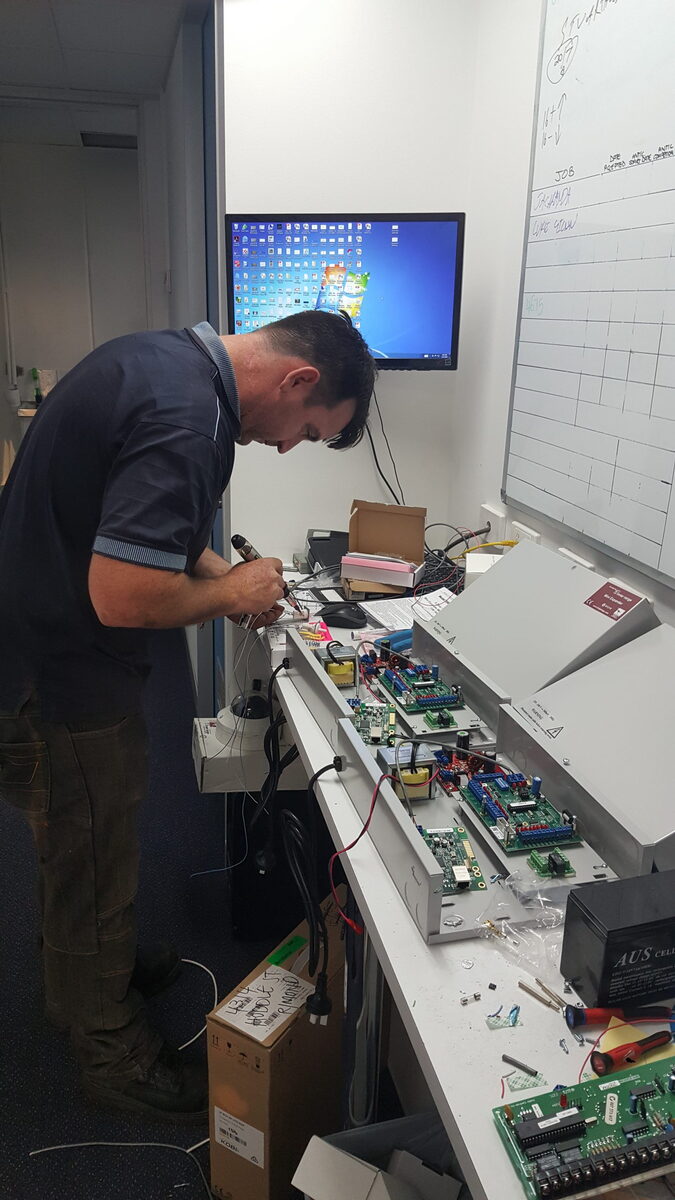
Under Queensland’s Security Providers Act 1993, security equipment includes an audio or visual recording system, and a person must hold the appropriate licence to carry out a security provider’s functions. You also must not engage someone to do that work for reward unless they hold the licence, so ask to see it.
| Role | Who counts | In-house position |
|---|---|---|
| Security equipment installer (s 6B) | Someone who, for reward, installs, repairs, services or maintains security equipment | An employee isn’t one merely because they work on their employer’s own security equipment |
| Security officer (s 7) | Someone who, for reward, watches another person’s property, including by personally operating a visual recording system | An employee watching their employer’s property isn’t one merely for that reason, unless employed principally to guard or watch it, or to watch licensed premises of the employer |
If you’re unsure where a staff member falls, ask a lawyer or the licensing regulator.
Common property, licensed venues and facial recognition carry extra rules
Body corporate common property
Body corporate sites have their own rules to check first. Queensland Government guidance says by-laws are the rules a body corporate makes to control and manage common property, and the OAIC tells people in strata title properties to check whether by-laws cover installing or using security cameras. The Queensland Government also points people to the Office of the Commissioner for Body Corporate and Community Management for its services. There’s more on these sites on our body corporate security page.
Licensed venues
Mandatory CCTV applies to certain licensed venues, and this rule doesn’t extend to businesses in general. Business Queensland says venues in the Brisbane City Council area authorised to trade past 1am must operate CCTV, along with other venues that have it as a specific licence condition. Section 142AH of the Liquor Act requires equipment at each patron entrance and exit, and signs likely to make patrons aware of it.
Facial recognition
Facial recognition faces a high bar for businesses the Privacy Act covers. The OAIC says biometric templates and facial images used for automated identification are sensitive information.

In February 2026 the Administrative Review Tribunal affirmed findings that Bunnings breached the principles on transparency and notice, while accepting it could rely on exemptions from consent for a limited purpose. The Privacy Commissioner called the decision “a useful case study, rather than a green light”. Her Kmart determination was still under review when the OAIC updated its guide in July 2026.
If you’re looking at those features, our TVT facial recognition guide shows what they do. Take the privacy question to your adviser. The OAIC says businesses considering facial recognition should do a privacy impact assessment.
What’s changing: a federal privacy right is in force, and Queensland’s review is on hold
The main recent change covered here is federal. A statutory tort for serious invasions of privacy started on 10 June 2025, which gives people another way to go to court over privacy harms. It reaches beyond organisations covered by the Australian Privacy Principles. The OAIC’s page doesn’t discuss workplace cameras, so treat it as background and ask a lawyer how it might apply to you. Queensland’s own reform steps are in this table.
| Date | Step |
|---|---|
| 24 July 2018 | Queensland’s Attorney-General asks the Law Reform Commission to review privacy protections for workers |
| 2020 | Report 77 on civil surveillance, dated February and tabled on 29 June, recommends replacing the Invasion of Privacy Act, with a draft Bill |
| May 2023 | The Queensland Government consults on a staged approach, with submissions closing on 31 May |
| 10 June 2025 | The federal privacy tort starts |
| 5 November 2026 | The Commission’s page lists the workplace review as on hold, with no ongoing work, and the Invasion of Privacy Act remains on the in-force legislation site |
The Queensland Department of Justice’s consultation page was last updated on 1 June 2023. Check the Queensland legislation site again before you rely on this timeline, because a new Bill would change it.
A pre-install checklist for the person specifying the cameras
Settle these points before you sign off camera positions, then take the open questions to your adviser.

- Write down what each camera is for, such as a stock area or staff safety.
- Mark each camera’s view on a floor plan, and move any that could see into toilets, showers or change rooms.
- Ask for written confirmation of which cameras have microphones, and whether sound is on.
- Check whether the Privacy Act covers your business, using the OAIC’s small business checklist.
- Decide how you’ll tell staff and visitors, and when.
- Name the people who can view footage, and write the policy.
- Ask each installer for their Queensland security licence details.
- Check for by-laws or liquor licence conditions if they apply to your site.
- If the system is already in place, find out what it records now. Our guide to upgrading older camera systems and our servicing page can help with that.

Questions to take to your adviser
- Could conversations near this camera count as private conversations?
- Do we need staff consent, and in what form?
- Are recordings of staff employee records in our situation?
- Can we use footage in a disciplinary process?
- What applies at our sites in other states?
For cameras at particular kinds of site, see our pages on office security and retail security. We also have CCTV pages for areas including the Brisbane CBD and Spring Hill. We can help with the cameras. Legal sign-off belongs with your lawyer.
Next steps
Working out a budget? Read what drives the cost of CCTV for a business. Ready to talk through a site? See our commercial CCTV page.
Frequently asked questions
Can an employer use CCTV to monitor staff in Queensland?
It may be reasonable, within limits. Employers in Queensland work within general laws, as the state has no specific workplace surveillance law. The federal regulator says monitoring some activities may be reasonable, to check work and resource use. The criminal offences covered on this page concern private areas and private conversations. If watching staff performance is the main goal, talk to a lawyer before the cameras go in.

Who can install or service workplace cameras in Brisbane?
In Queensland, someone doing this work for reward needs the appropriate security licence, so ask for the details before you engage them. An employee working on their employer’s own equipment has a limited exception. Access Alarms is based in Eagle Farm and services CCTV, including systems other companies installed, which helps if you’ve inherited cameras at a new site. Call 1300 049 969 to talk it through.
Do you legally have to tell people you have CCTV?
That depends on your business. One the Privacy Act covers must take reasonable steps to tell people about the collection, at or before the time or as soon as practicable after, according to the OAIC’s guidelines. Licensed venues under the Liquor Act’s CCTV conditions must display signs for patrons. The ACT has written notice and entrance sign duties for employers. If you sit outside those groups, ask a lawyer, and consider telling people anyway.
Do security cameras record audio?
Many can. The Queensland Law Reform Commission noted that a video camera often has audio recording capability, so one unit can work as both a camera and a listening device. Whether yours is recording sound comes down to the model and its settings. Ask your installer to confirm this for each camera, because Queensland has a separate offence for using a listening device on a private conversation.

Can I have CCTV in my shop?
The same general laws covered on this page apply to a shop. It has customers on camera as well as staff, so check whether the Privacy Act covers you and how you’ll tell people. Think about change rooms and toilets when you place cameras. Facial recognition is a separate, harder question, so get advice before you switch on that kind of feature. A lawyer can confirm how this applies to your shop.
What are the new surveillance laws in Australia?
The federal tort for serious invasions of privacy, which started on 10 June 2025, is the main recent change covered here. The OAIC also updated its facial recognition guide in July 2026 after the Bunnings decision. For Queensland, the Law Reform Commission’s workplace review was on hold when we checked on 5 November 2026. Other states have their own laws, so check each one you operate in.
Sources
- Terms of reference: Queensland’s laws relating to workplace surveillance, Queensland Law Reform Commission, qlrc.qld.gov.au, accessed 5 November 2026
- Workplace surveillance review, Queensland Law Reform Commission, qlrc.qld.gov.au, accessed 5 November 2026
- Reviews on hold, Queensland Law Reform Commission, qlrc.qld.gov.au, accessed 5 November 2026
- Report No 77: Review of Queensland’s laws relating to civil surveillance and the protection of privacy, Queensland Law Reform Commission, qlrc.qld.gov.au, accessed 5 November 2026
- Civil surveillance reforms consultation, Queensland Department of Justice, justice.qld.gov.au, accessed 5 November 2026
- Consultation on surveillance reforms for Queenslanders, Queensland Ministerial Media Statements, statements.qld.gov.au, accessed 5 November 2026
- Invasion of Privacy Act 1971, Queensland Legislation, legislation.qld.gov.au, accessed 5 November 2026
- Criminal Code Act 1899, Queensland Legislation, legislation.qld.gov.au, accessed 5 November 2026
- Security Providers Act 1993, Queensland Legislation, legislation.qld.gov.au, accessed 5 November 2026
- Liquor Act 1992, Queensland Legislation, legislation.qld.gov.au, accessed 5 November 2026
- Complying with CCTV legislation for licensed venues, Business Queensland, business.qld.gov.au, accessed 5 November 2026
- Body corporate and community management, Queensland Government, qld.gov.au, accessed 5 November 2026
- Security cameras, Office of the Australian Information Commissioner, oaic.gov.au, accessed 5 November 2026
- Workplace monitoring and surveillance, Office of the Australian Information Commissioner, oaic.gov.au, accessed 5 November 2026
- Chapter 5: APP 5, Notification of the collection of personal information, Australian Privacy Principles guidelines, Office of the Australian Information Commissioner, oaic.gov.au, accessed 5 November 2026
- Small business, Office of the Australian Information Commissioner, oaic.gov.au, accessed 5 November 2026
- Employee records exemption, Office of the Australian Information Commissioner, oaic.gov.au, accessed 5 November 2026
- Statutory tort for serious invasions of privacy, Office of the Australian Information Commissioner, oaic.gov.au, accessed 5 November 2026
- Facial recognition technology: a guide to assessing the privacy risks (July 2026), Office of the Australian Information Commissioner, oaic.gov.au, accessed 5 November 2026
- OAIC statement on Administrative Review Tribunal’s Bunnings decision, Office of the Australian Information Commissioner, oaic.gov.au, accessed 5 November 2026
- Privacy Commissioner statement on Administrative Review Tribunal’s Bunnings decision, Office of the Australian Information Commissioner, oaic.gov.au, accessed 5 November 2026
- Workplace privacy best practice guide, Fair Work Ombudsman, fairwork.gov.au, accessed 5 November 2026
- Workplace Privacy Act 2011, ACT Legislation Register, legislation.act.gov.au, accessed 5 November 2026
- DCJ workplace surveillance notice, NSW Department of Communities and Justice, dcj.nsw.gov.au, accessed 5 November 2026